Antiquity · war
Attila the Hun
The emperor in Constantinople paid a nomad king tons of gold to stay away, and it still was not enough.
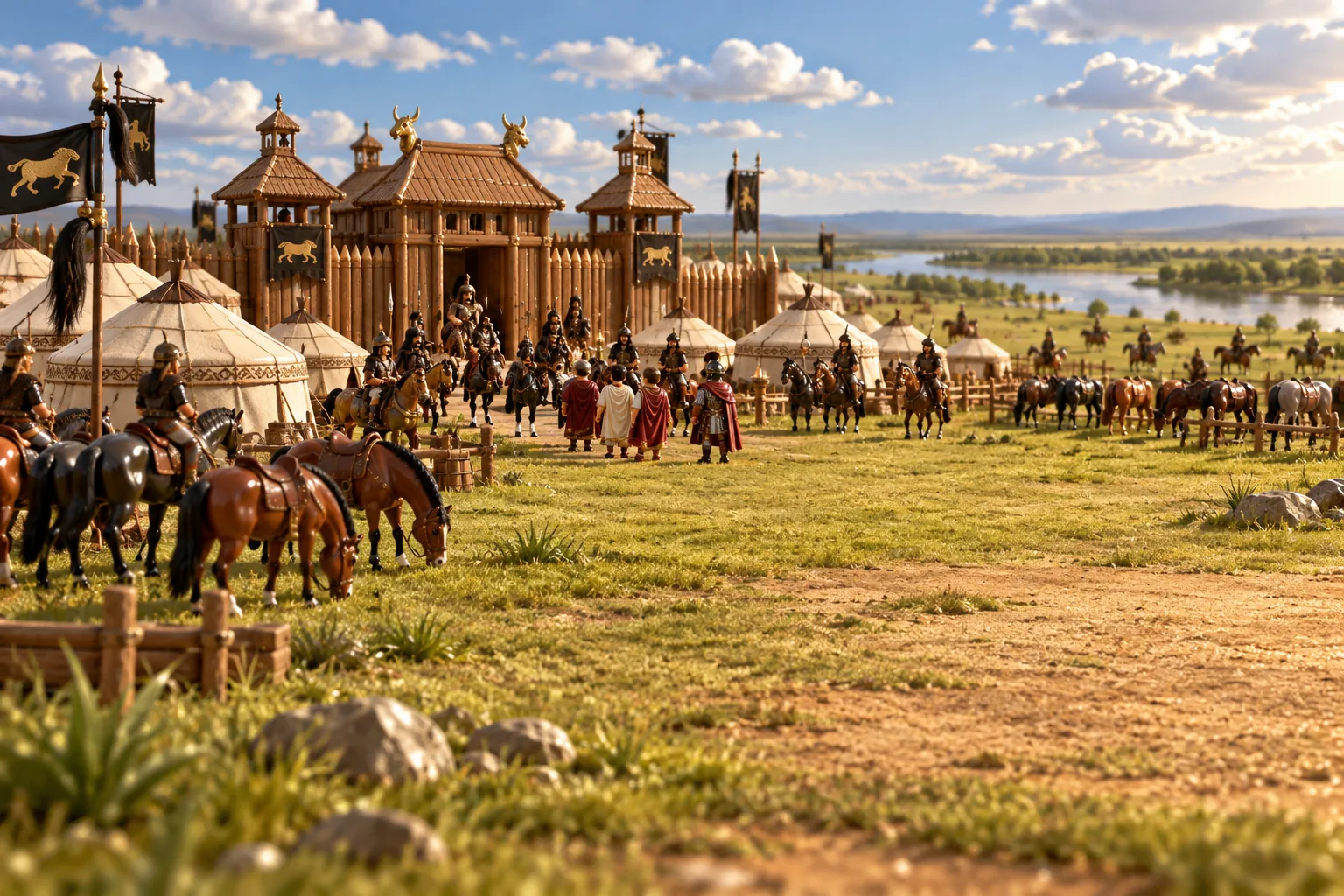
The Huns were horse-riding nomads who had crossed the Volga in the 370s, and their mounted archers seemed unbeatable. When their king Rugila died in 434, his nephews Attila and Bleda took over together. They met Roman envoys on horseback and forced the Eastern Empire to double its yearly tribute of gold. When the Romans broke the deal, the Huns crossed the Danube, took Belgrade and Sofia, and broke into Niš with battering rams and rolling siege towers. Only the double walls of Constantinople stopped them. The emperor paid 6,000 Roman pounds of gold and tripled the tribute. Around 445 Bleda died and Attila ruled alone.
In 450 Honoria, sister of the Western emperor Valentinian III, sent Attila a plea for help and her engagement ring to escape a forced marriage. Attila chose to read it as a proposal and asked for half the Western Empire as dowry. In 451 he crossed the Rhine and reached Orléans before a Roman and Visigothic army under Aëtius fought him to a standstill on the Catalaunian Plains. The next year he swept into Italy and razed Aquileia. Pope Leo I met him near Mantua, and he withdrew.
In early 453, at the feast for his marriage to a young woman called Ildico, Attila suffered severe bleeding and was found dead the next morning. His sons quarrelled over the inheritance, the subject peoples rebelled under the Gepid king Ardaric, and the Hunnic empire quickly fell apart.
Read more on Wikipedia
Sources: en.wikipedia.org/wiki/Attila


