Early modern · people
Atlantic slave trade
For more than three centuries ships carried people from Africa to the Americas in chains: about 12.5 million were taken, and some 10.7 million lived through the crossing.
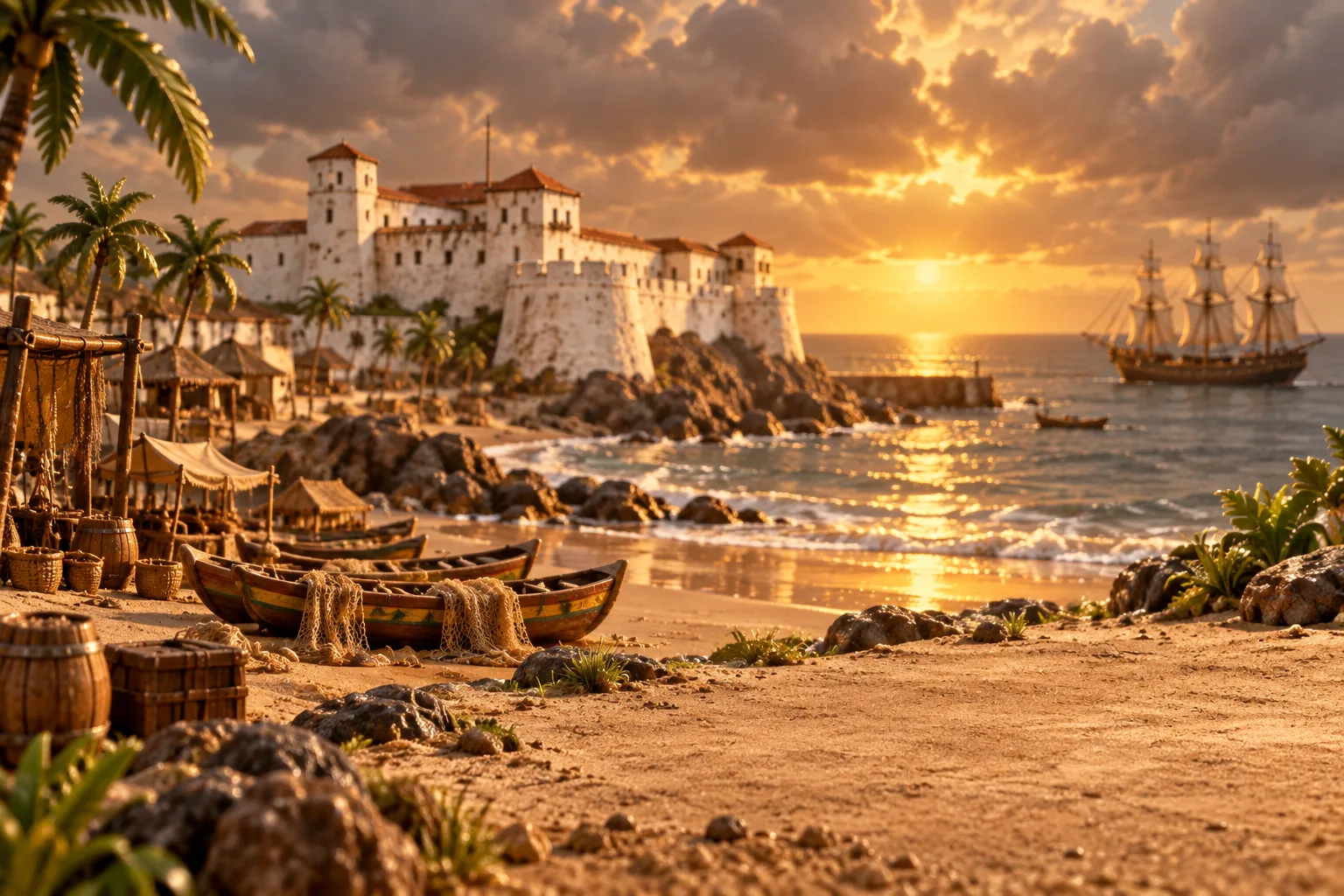
Portuguese ships were buying captives on the African coast by the 15th century, first for the sugar plantations of Madeira and the Canary Islands. From 1525 they carried enslaved people directly across the ocean, from São Tomé to Hispaniola. The Americas needed labour: the native population was collapsing under European diseases, and few Europeans wanted to emigrate. Plantations of sugar, tobacco, coffee, rice and cotton, and mines of gold and silver, came to be worked by Africans and their children, who by law were property.
Most captives came from West and Central Africa. They were usually bought from African rulers and merchants, often as prisoners of war, in exchange for guns, gunpowder, alcohol, textiles and other goods. Then came the Middle Passage, with people packed tightly into filthy holds where many died. They resisted: shipping records list 350 revolts aboard slave ships between 1698 and 1807. Portugal carried the most people, followed by Britain, Spain, France, the Netherlands, the United States and Denmark.
Denmark was the first country to ban the trade by law, in 1792. Britain followed in 1807, after a long campaign by Quakers, William Wilberforce and the formerly enslaved writer Olaudah Equiano, and its navy then hunted slave ships along the African coast. Brazil outlawed the trade in 1831 but ended it only in 1850, and the last known slave ship reached Cuba in 1867.
Read more on Wikipedia


