Ancient world · politics
Athenian democracy
In Athens, citizens who dawdled in the market on assembly day were rounded up with a rope dipped in red paint, and anyone caught with red on his clothes was fined.
In 510 BC the Athenians drove out Hippias, the last of a family of tyrants. Two years later a nobleman named Cleisthenes pushed through reforms that changed how the city was run. He made the old tribes, dominated by aristocratic families, politically irrelevant and created ten new ones built from local districts called demes. Every male citizen over 18 had to register in his deme, and so belonged to the city by where he lived rather than by birth or wealth.
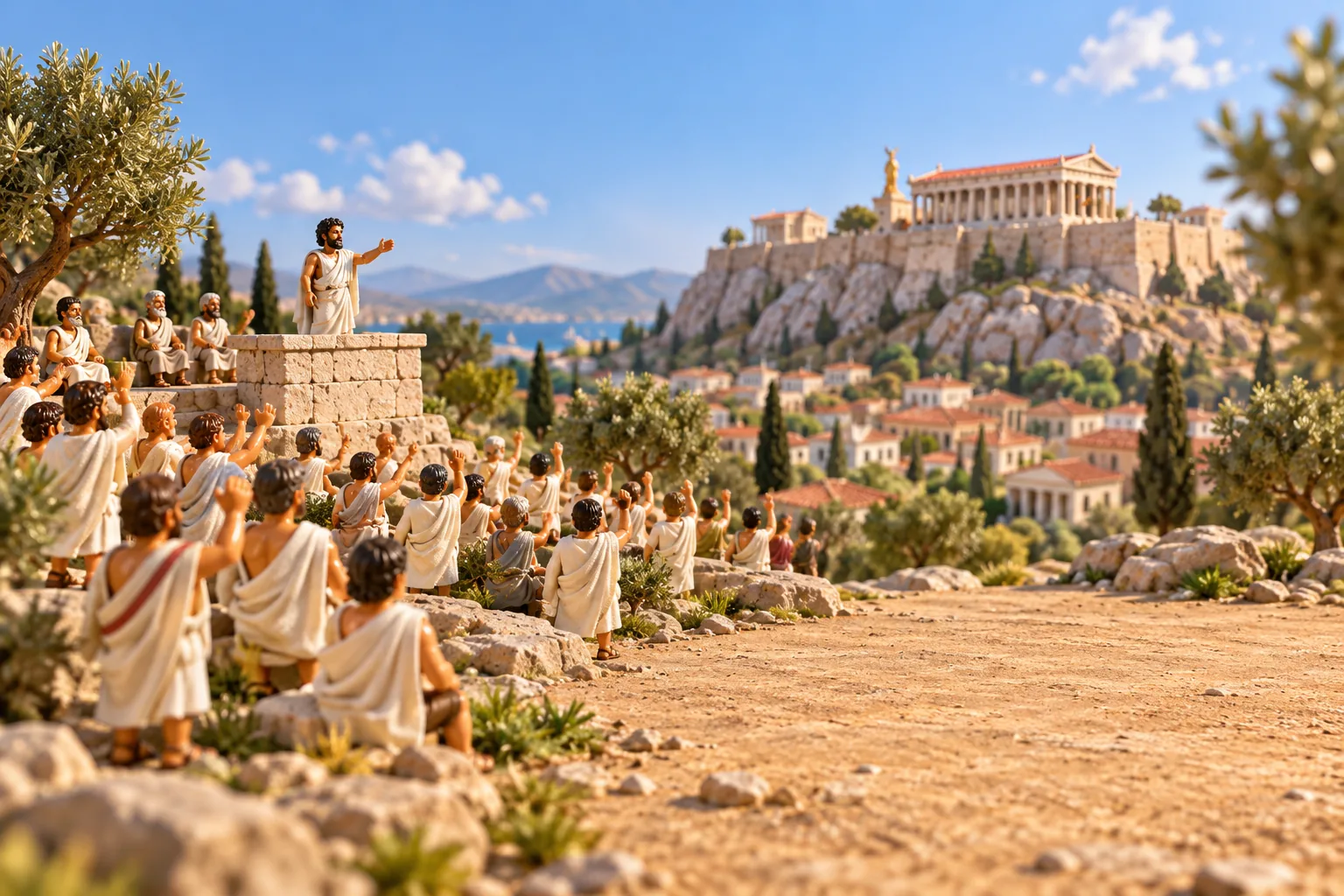
Power now lay with three big bodies. In the assembly any adult male citizen could come, speak and vote, usually by a show of hands; some decisions needed a quorum of 6,000. A council of 500, fifty from each tribe, chosen by lot every year, prepared its business. Courts with juries of 200 or more ordinary citizens judged cases with no professional judge in charge. From the early 5th century the assembly could also vote once a year to exile a man thought dangerous to the state, a practice called ostracism.
It was government by the people, but not by everyone. Women, slaves and resident foreigners were excluded, and adult male citizens were probably no more than 30 percent of the adult population. In the 4th century there may have been some 30,000 of them in a population of 250,000 to 300,000. Still, Athens became the best-known democracy of the ancient world.
Read more on Wikipedia


