Middle Ages · state
Asuka period
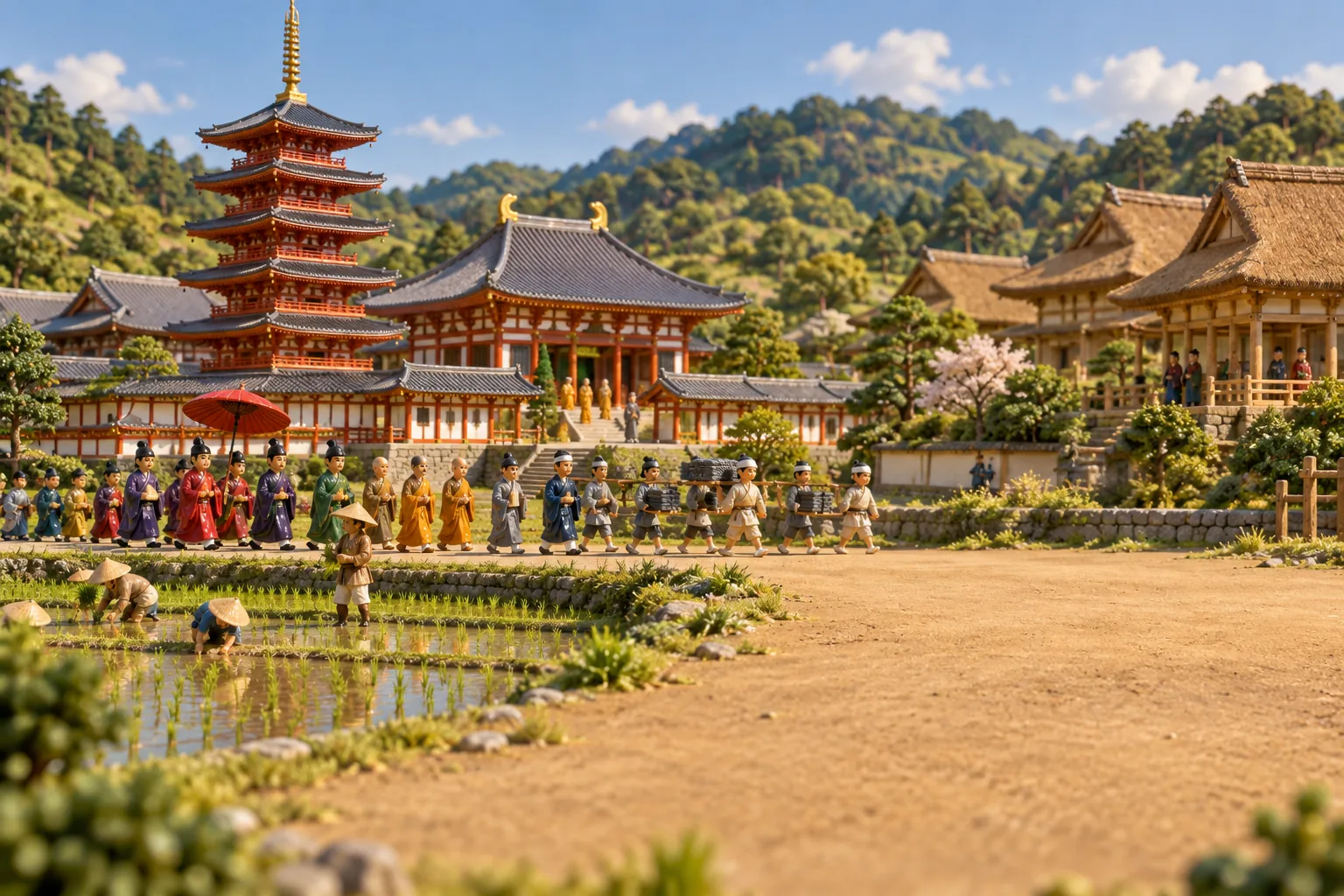
In a small valley south of Nara, a court that had no fixed capital adopted Buddhism, Chinese writing and law, and began to call its country Nihon.
The period is named after the Asuka valley, where the Yamato rulers kept their palaces. Buddhism reached the court in 538, sent by King Seong of the Korean kingdom of Baekje, and the powerful Soga clan took it up against rival clans. By 587 the Soga chief Soga no Umako was strong enough to make and unmake emperors, and in 596 his clan temple Asuka-dera, built with the help of craftsmen from Baekje, was completed.
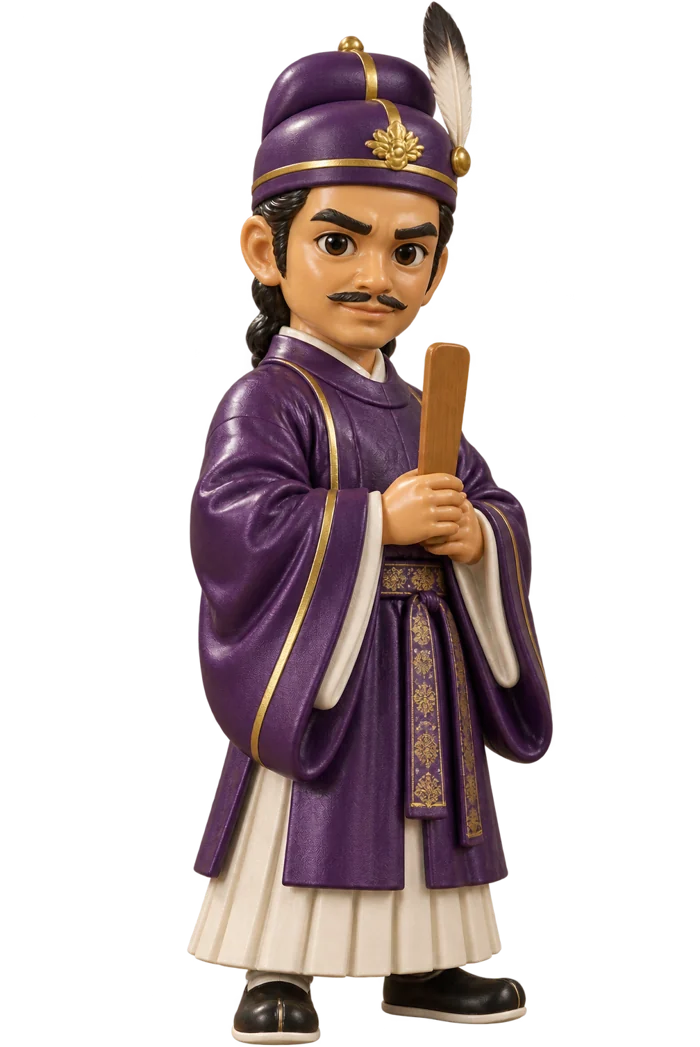
Under Empress Suiko, the first reigning empress, her nephew Prince Shōtoku became the great reformer of the age. In 603 the court set up the Twelve Level Cap and Rank System, which let officials rise by merit. Shōtoku's Seventeen-article constitution laid down Confucian rules for harmony, he founded Hōryū-ji in 607, and that year he sent Ono no Imoko to the Sui court with a letter from the Son of Heaven in the Land of the Rising Sun to the Son of Heaven of the Land of the Setting Sun.
In 645 Prince Naka no Ōe and Nakatomi no Kamatari overthrew the Soga in a palace coup and began the Taika Reform. Kamatari received the new family name Fujiwara. The Taihō Code of 701 set out a Chinese-style state, and in 710 the court moved to Nara.
Read more on Wikipedia
Sources: en.wikipedia.org/wiki/Asuka period, en.wikipedia.org/wiki/Twelve Level Cap and Rank System, en.wikipedia.org/wiki/Hōryū-ji, en.wikipedia.org/wiki/Asuka-dera
