Middle Ages · state
Ashikaga shogunate
Its shoguns gave Japan the Golden Pavilion, Noh theatre and the tea ceremony, then lost control in a civil war that burned Kyoto.
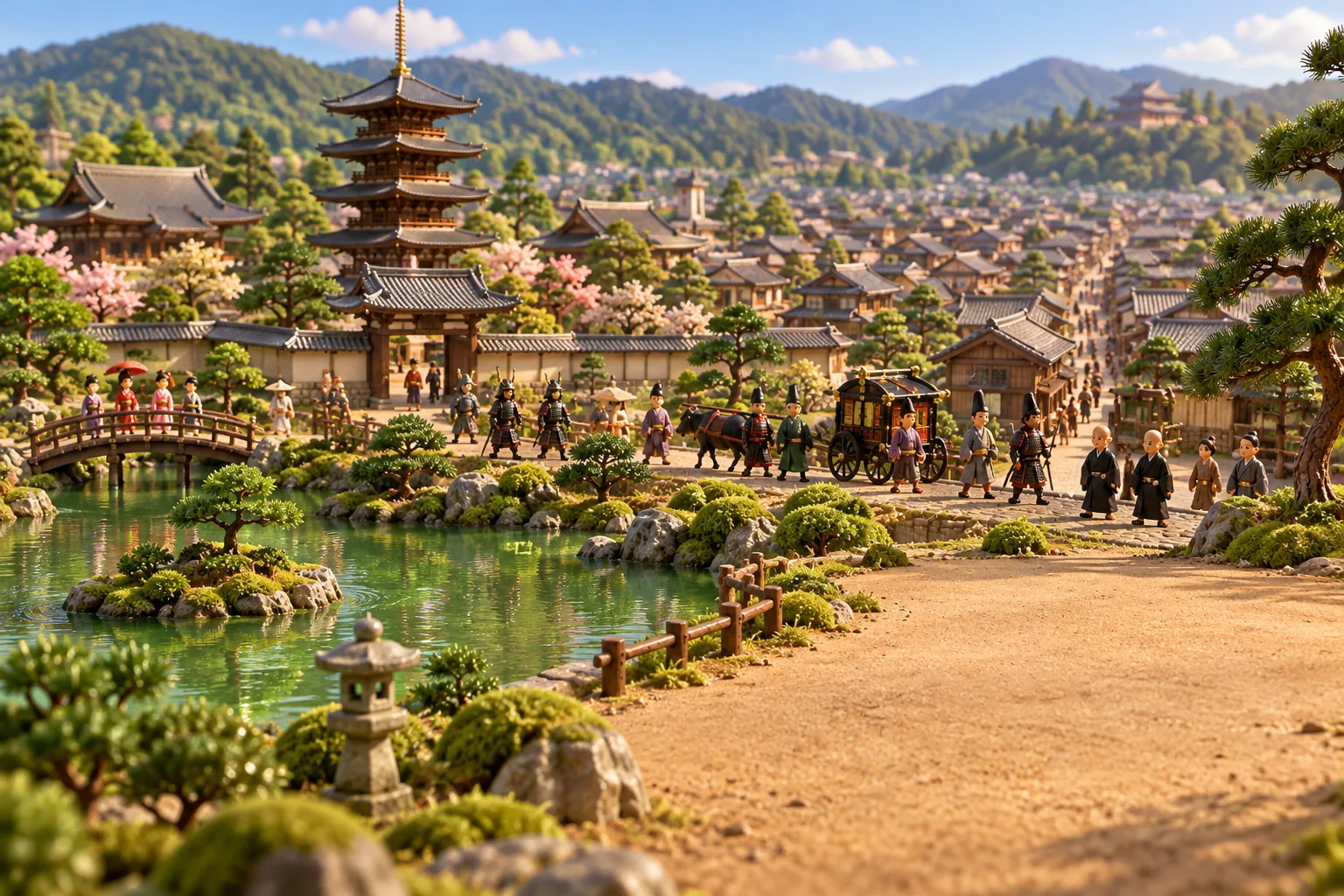
In 1333 Emperor Go-Daigo rose against the Kamakura shogunate, and the general sent to crush him, Ashikaga Takauji, changed sides and helped destroy it. Go-Daigo's restored imperial rule soon disappointed the warriors, and in 1336 Takauji set up his own military government in Kyoto with himself as shōgun. He installed a rival emperor, and for 56 years a Northern Court in Kyoto fought a Southern Court in Yoshino.
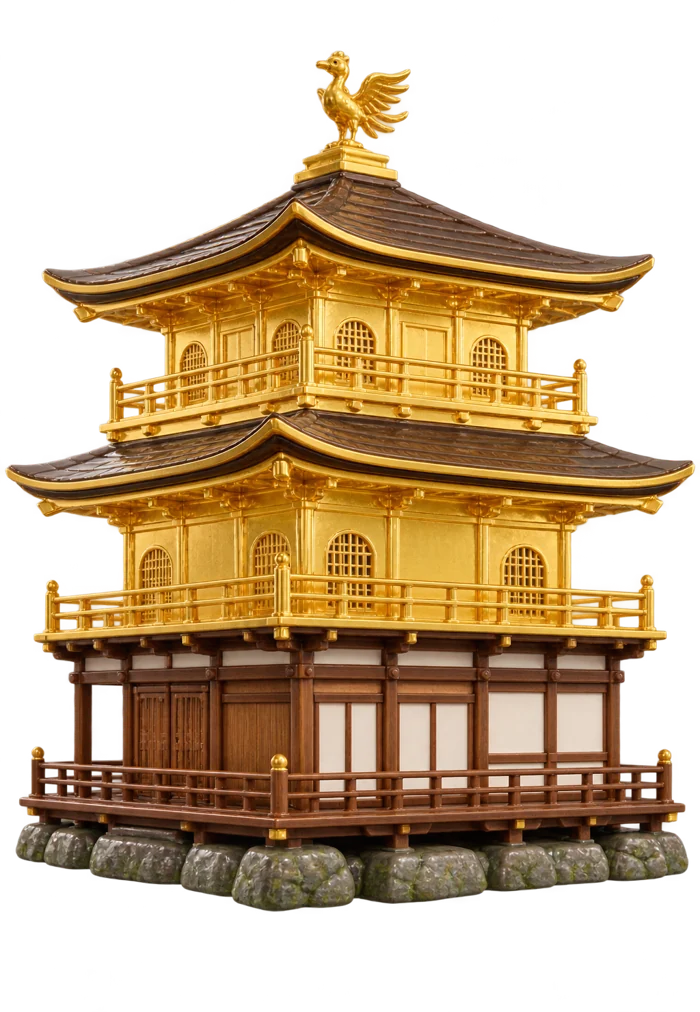
The third shōgun, Ashikaga Yoshimitsu, ended the split in 1392 and brought the shogunate to its peak. He traded with Ming China and Joseon Korea, receiving porcelain, silk and copper coins for swords, timber and ores, and in 1397 he bought a villa in the northern hills of Kyoto that became Kinkaku-ji, the Temple of the Golden Pavilion. Under the Ashikaga, Zen shaped the arts: Noh theatre was born, the tea ceremony moved into small quiet rooms and flower arranging became an art.
Yet the Ashikaga were the weakest of Japan's three shogunates, with little land of their own and great dependence on the daimyō. After a string of succession crises the Ōnin War of 1467–1477 wrecked Kyoto and opened the Sengoku age of warring states. In 1573 Oda Nobunaga drove the last shōgun, Ashikaga Yoshiaki, out of Kyoto.
Read more on Wikipedia
Sources: en.wikipedia.org/wiki/Ashikaga shogunate, en.wikipedia.org/wiki/Kinkaku-ji