Antiquity · person
Aristotle
The man who once taught a thirteen-year-old Alexander the Great came back to Athens and rented a gymnasium by a sacred grove to found a school of his own.
Aristotle was born in 384 BC in Stagira, a small town in northern Greece. His father Nicomachus was the personal physician of King Amyntas of Macedon, but he died when Aristotle was a child. At seventeen or eighteen Aristotle went to Athens to study at Plato's Academy and stayed for about twenty years. After Plato's death he left for Assos in Asia Minor, where he married Pythias, and then for the island of Lesbos, where he and his colleague Theophrastus studied plants and sea creatures.
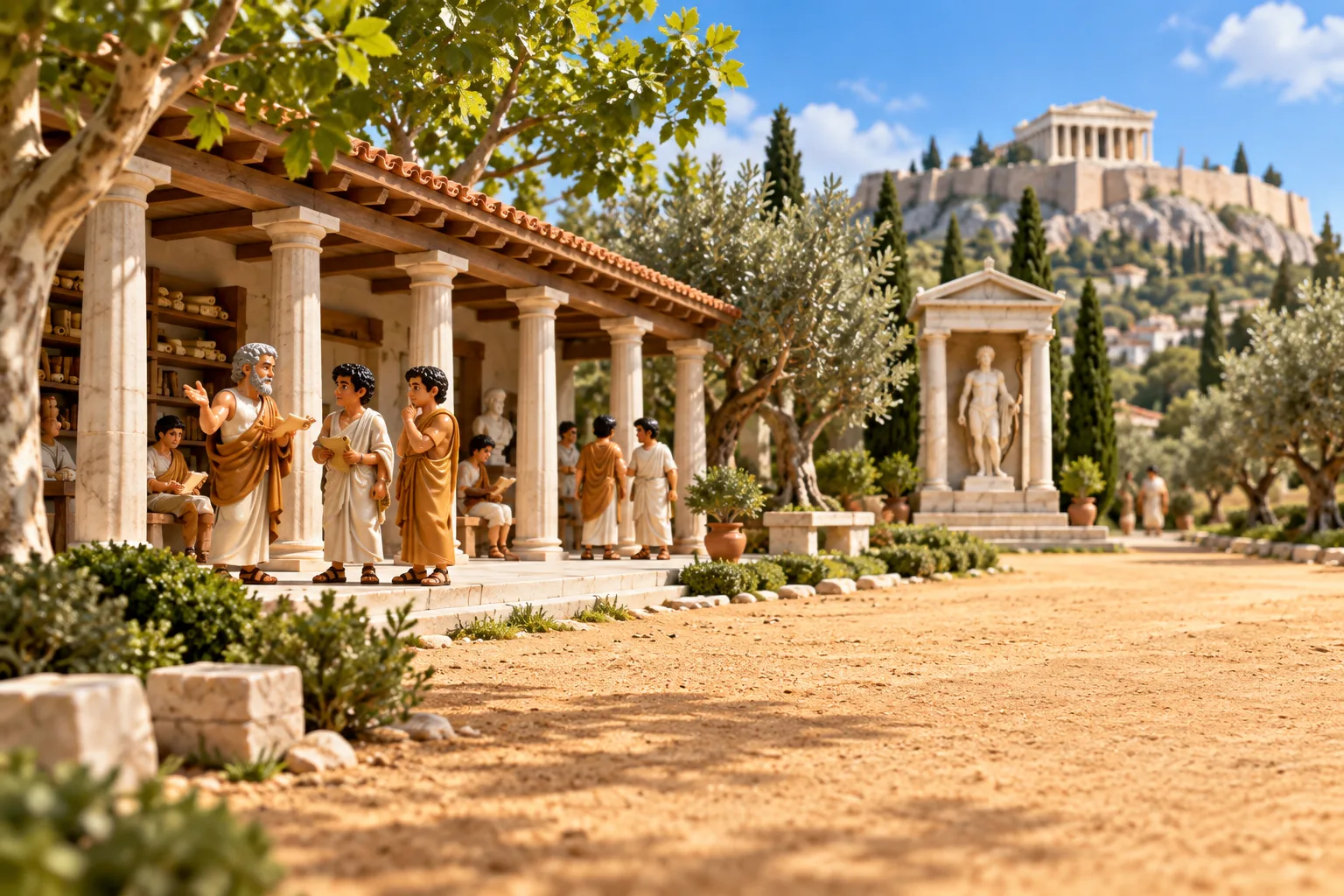
In 343 BC King Philip II of Macedon invited him to tutor his thirteen-year-old son, the future Alexander the Great. In 335 BC, a year after Philip was assassinated, Aristotle returned to Athens. As a foreign resident he could not own property, so he rented a building by the grove of Apollo Lykeios, the Lyceum, and opened a school there. Its colonnade, the peripatos, gave his followers their name, the Peripatetics. Over the next twelve years he wrote on logic, physics, biology, ethics, politics, poetry and rhetoric, and built a great library of manuscripts and maps.
In 322 BC he was accused of impiety and fled to his mother's family estate at Chalcis on Euboea, reportedly saying he would not let the Athenians sin twice against philosophy. He died there the same year. Medieval Muslim scholars called him "The First Teacher", and Thomas Aquinas called him simply "The Philosopher".
Read more on Wikipedia
Sources: en.wikipedia.org/wiki/Aristotle


