
Industrial age · state
Argentina
Around 1900 it ranked among the richest countries per person, then swung between coups for half a century.
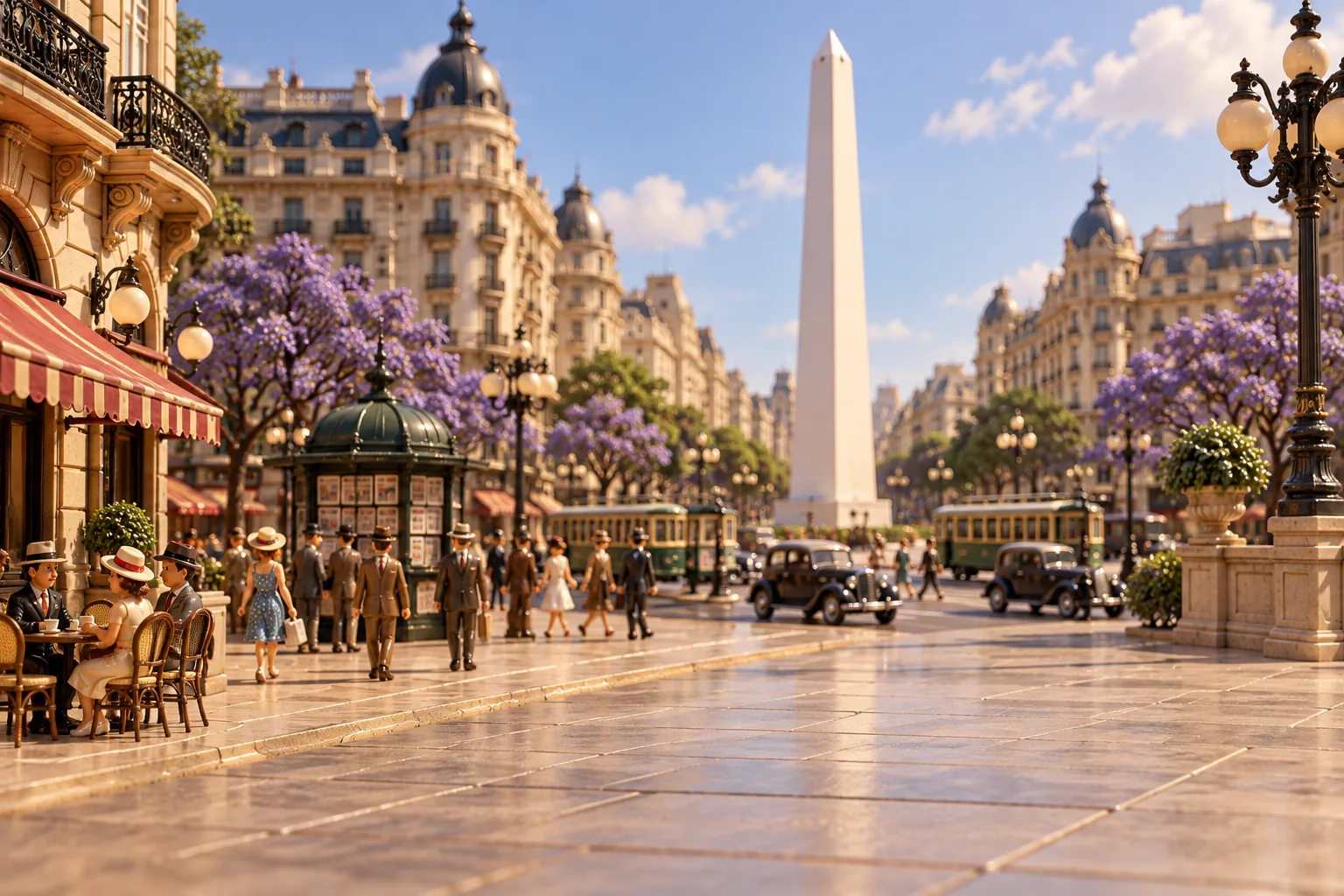
Millions of European immigrants, mostly Italians and Spaniards, poured into Argentina in a wave second only to that of the United States. Between 1870 and 1910 the population grew fivefold and wheat exports rose from 100,000 to 2.5 million tonnes a year, and by 1908 Argentina ranked as the seventh wealthiest developed nation. Then the Great Depression struck, and in 1930 General José Félix Uriburu ousted President Hipólito Yrigoyen, opening the Infamous Decade. Four more coups followed, in 1943, 1955, 1962 and 1966.
Juan Perón rose from the labour department of a military government to win the presidency in 1946. His wife Eva Perón was central to his movement until her death in 1952. Perón ruled with a heavy hand, firing over 2,000 university teachers, and in 1955 the navy bombed the Plaza de Mayo; months later he was overthrown and went into exile in Spain. He came back to power and died in office in 1974.
The coup of 1976 brought a military junta whose Dirty War killed an estimated 15,000 to 30,000 people. In April 1982 it invaded the Falkland Islands and lost the war. Raúl Alfonsín, elected in 1983, put the junta leaders on trial, and democracy has endured since, even through the crisis of 2001–02.
Read more on Wikipedia
Sources: en.wikipedia.org/wiki/Argentina, en.wikipedia.org/wiki/Obelisco de Buenos Aires