Antiquity · person
Archimedes
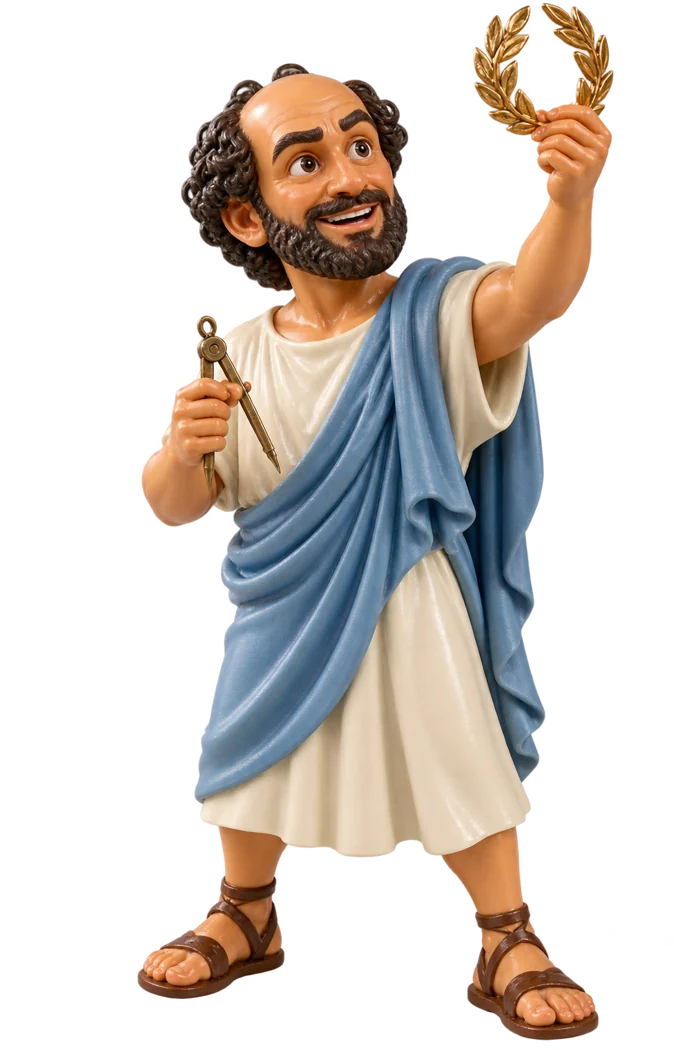
Asked whether a king's golden wreath was pure, he noticed the water rise as he stepped into his bath, and ran into the street shouting "Eureka!"
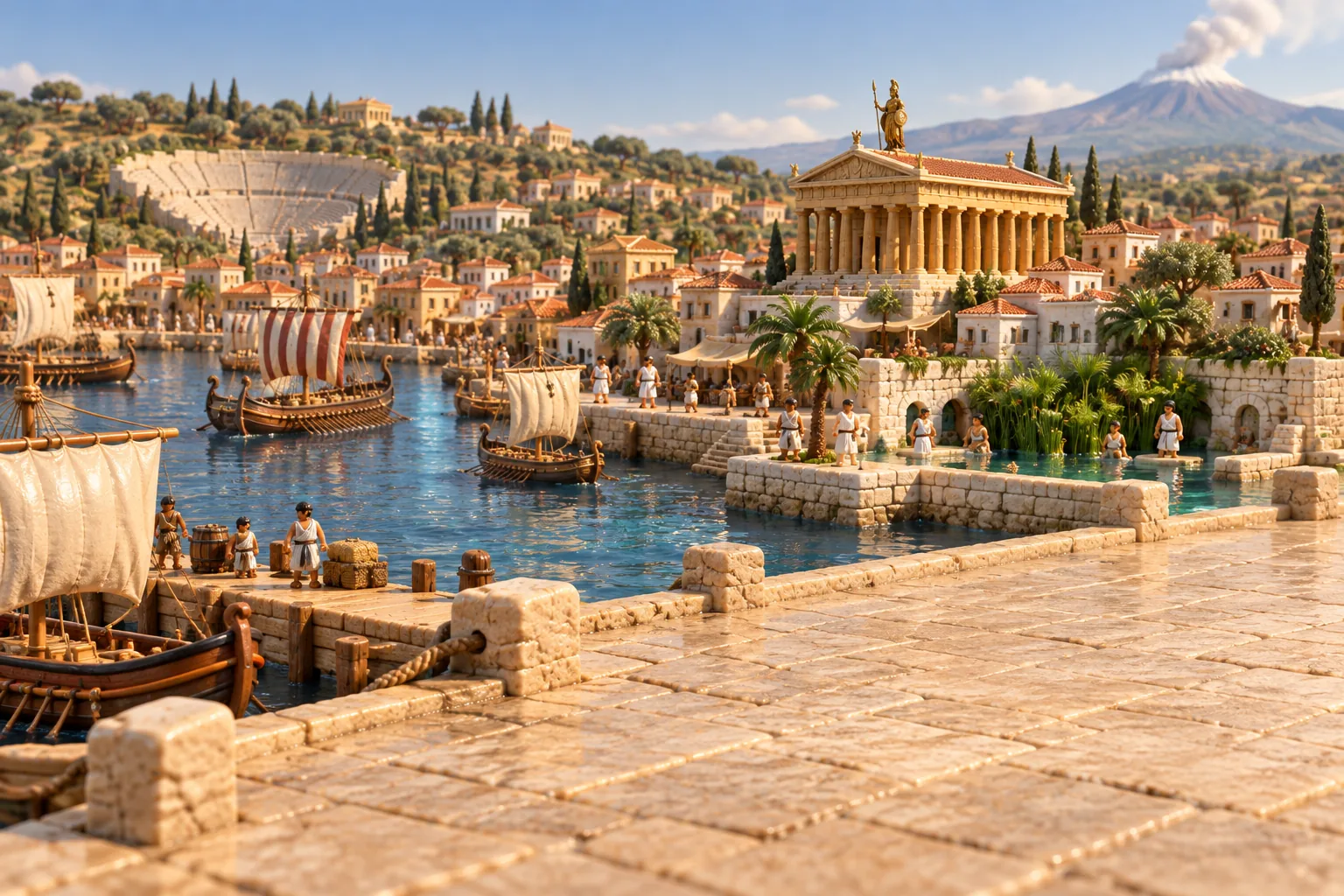
Archimedes was born around 287 BC in Syracuse, the great Greek city of Sicily. In The Sand Reckoner he names his father as Phidias, an astronomer, and Plutarch says he was related to the city's ruler, King Hiero II. Little else is known of his life, but his works addressed to Dositheus, a pupil of the astronomer Conon of Samos, and to the librarian Eratosthenes show that he kept in touch with the scholars of Alexandria.
His mathematics was centuries ahead of its time. Using the method of exhaustion he found the area of a circle, the surface and volume of a sphere and the area under a parabola, approximated pi, and in The Sand Reckoner devised a way to write huge numbers. He proved the law of the lever, saying, according to Pappus, "Give me a place to stand on, and I will move the Earth", and in On Floating Bodies set out the law of buoyancy now called Archimedes' principle.
In the Second Punic War Syracuse went over to Carthage, and from 214 BC a Roman army under Marcellus besieged it. Archimedes' machines, catapults and cranes with an iron claw that lifted ships out of the water, held the Romans off for a long time. When the city fell in 212 BC he was killed by a Roman soldier, against Marcellus's orders that he be spared. Livy says he was drawing figures in the dust. His tomb bore the sphere and cylinder he had asked for.
Read more on Wikipedia
Sources: en.wikipedia.org/wiki/Archimedes


