Middle Ages · war
Arab–Byzantine wars
A new weapon, later called Greek fire, invented by a Christian refugee from Syria, saved Constantinople from the Arab fleets.
In 629 the Byzantine emperor Heraclius had just won a long, exhausting war against Persia. Within a few years both empires faced a new power: the Arabs, newly united by Islam. At the Yarmuk in 636 the armies of the Rashidun Caliphate lured the Byzantines into a pitched battle and destroyed them. Syria fell by 639 and Egypt by 642, and North Africa was taken bit by bit over the following decades. Leaving Antioch, Heraclius is said to have cried: "Peace unto thee, O Syria, and what an excellent country this is for the enemy!"
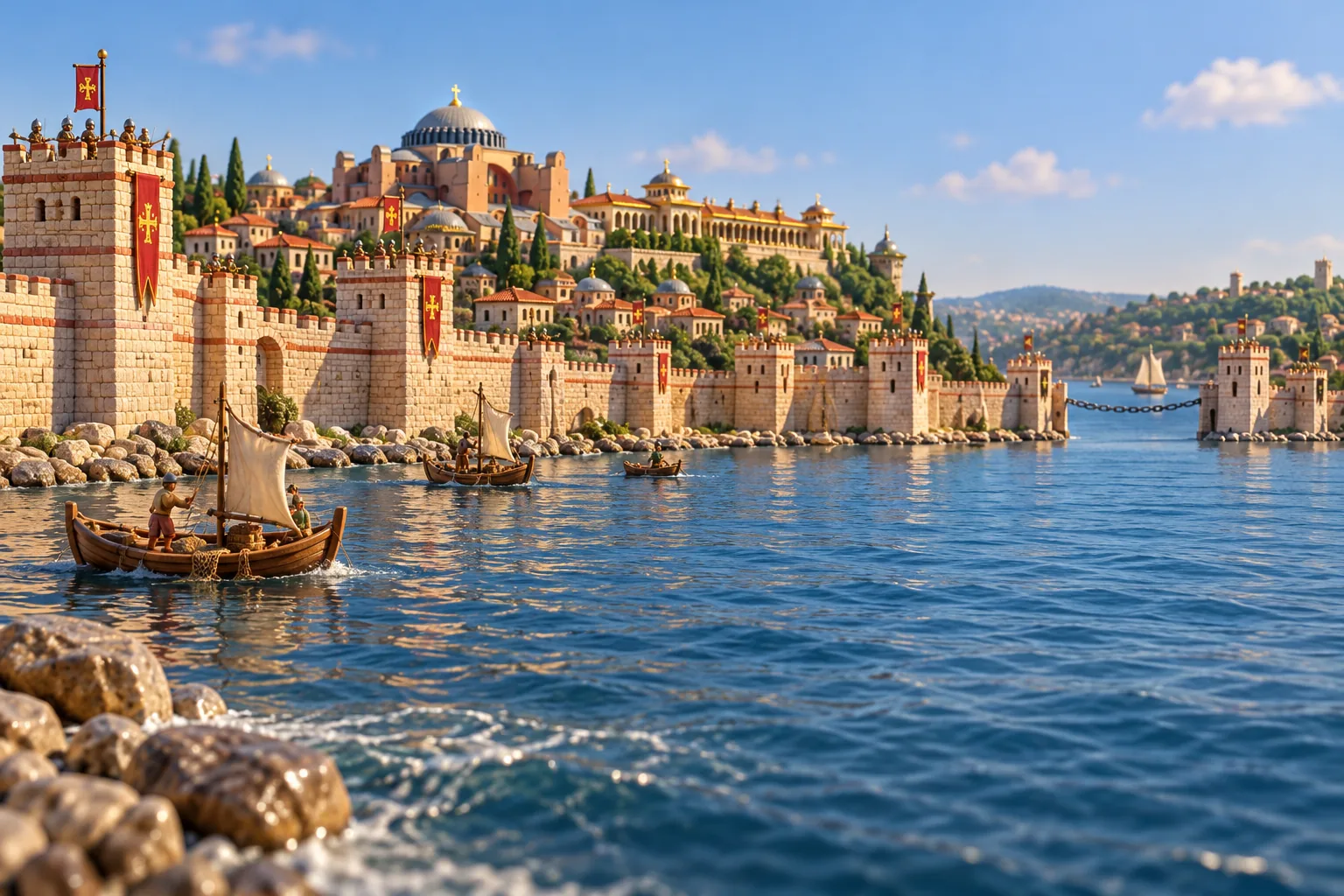
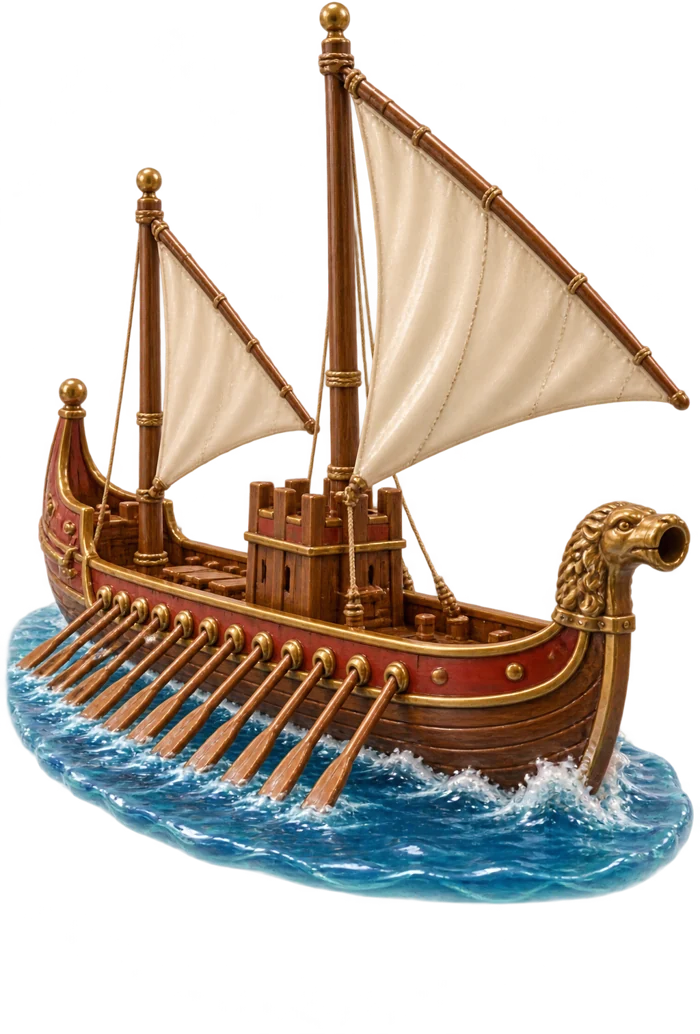
The Umayyad caliphs built fleets and twice besieged Constantinople itself. In the first siege, which ended in 678, the emperor Constantine IV destroyed the Arab navy with "Greek fire", invented by Kallinikos, a Christian refugee from Syria. In 717 the prince Maslama came with a huge army and fleet; the city held behind its repaired sea walls, Greek fire kept the ships away, a Bulgar khan attacked from the rear, and after a terrible winter the siege was abandoned on 15 August 718.
The border then settled along the Taurus Mountains, a ravaged frontier of yearly raids. Under the Abbasids the Arabs took Crete and Sicily. In the 10th century the Macedonian emperors struck back: Nikephoros II Phokas recovered Crete and northern Syria, John I Tzimiskes almost reached Jerusalem, and under Basil II the empire was at its strongest in nearly five centuries.
Read more on Wikipedia