Our time · exploration
Apollo program
At its peak the race to the Moon employed 400,000 people and cost more than any nation had ever spent on anything in peacetime.
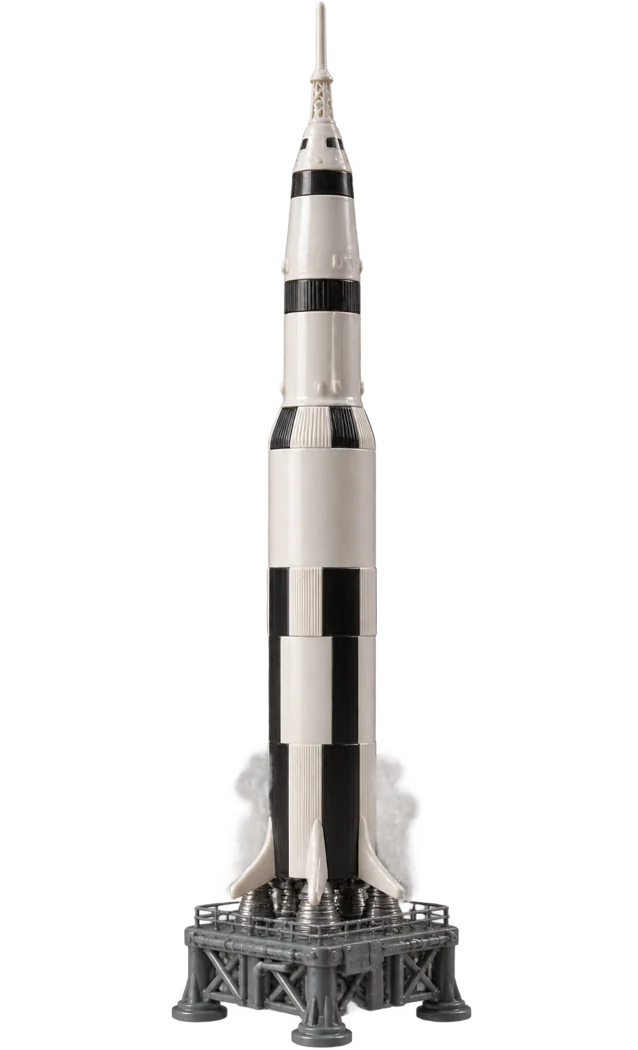
NASA conceived Apollo in 1960, under President Dwight D. Eisenhower, as the next step after the one-man Mercury capsules. Then on 25 May 1961 President John F. Kennedy asked Congress to commit the nation to "landing a man on the Moon and returning him safely to the Earth" before the decade was out. At its peak Apollo employed 400,000 people and needed the help of more than 20,000 companies and universities, and it ended up costing $25.4 billion. In 1962 NASA chose to send a small lander down from lunar orbit, which meant one giant Saturn V rocket could launch the whole mission.
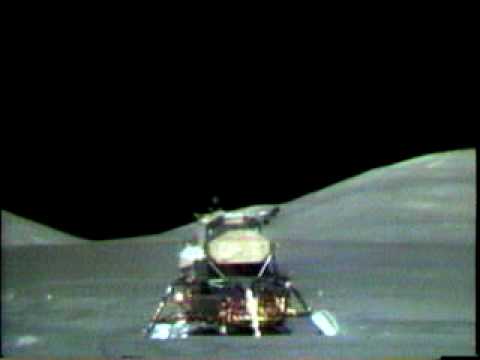
In 1967 the crew of Apollo 1, Gus Grissom, Ed White and Roger Chaffee, were killed by a fire in their cabin during a ground test. The first crewed Apollo flight came in 1968. That December Apollo 8 became the first crewed spacecraft to leave Earth orbit and circle the Moon, and on Christmas Eve its crew read from the Book of Genesis on live television. On 20 July 1969 Neil Armstrong and Buzz Aldrin of Apollo 11 landed on the Moon while Michael Collins waited in orbit. About 650 million people watched on television.
Five more missions landed. Apollo 13 never reached the surface: an oxygen tank exploded on the way, and the crew survived by using their lunar module as a lifeboat. Apollo 17 made the last landing in December 1972. Budget cuts cancelled three further missions.
Read more on Wikipedia
Sources: en.wikipedia.org/wiki/Apollo program