
Industrial age · war
Anglo-Zulu War
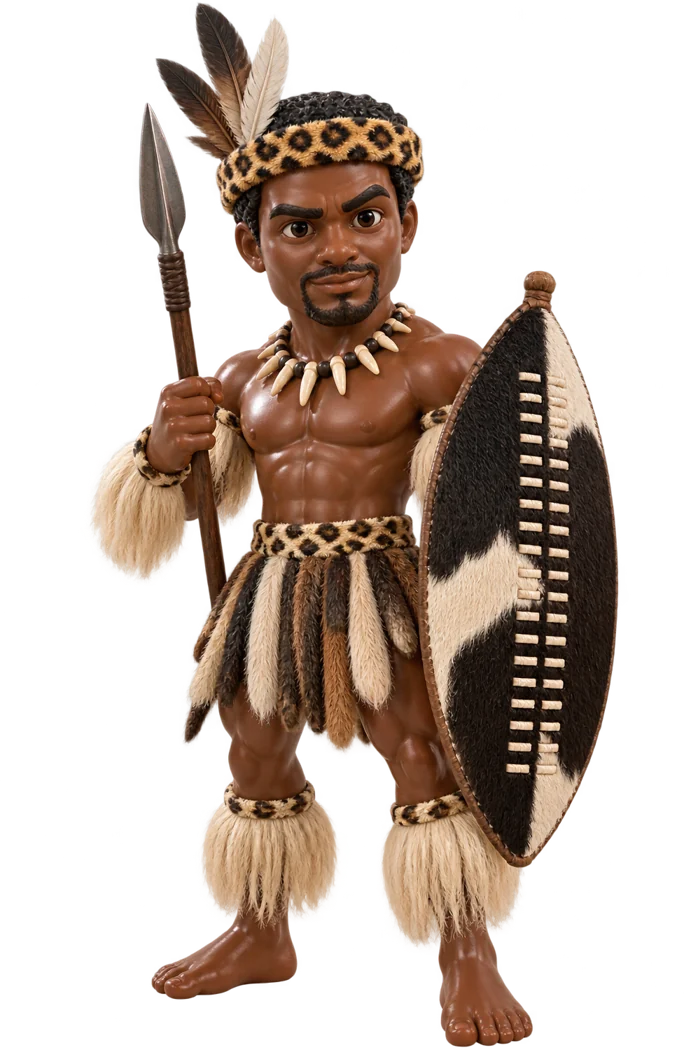
Armed mostly with stabbing spears and cowhide shields, a Zulu army wiped out a modern British column in a single day.
Britain wanted to join the colonies, African kingdoms and Boer republics of southern Africa into one confederation, as it had done in Canada. In the way stood the strong independent Zulu Kingdom of King Cetshwayo, who had revived the regiments of his uncle Shaka. On 11 December 1878 the High Commissioner, Sir Bartle Frere, acting on his own initiative, sent Cetshwayo an ultimatum that demanded, among other things, that the Zulu army be disbanded. When it was rejected, Lord Chelmsford invaded Zululand on 11 January 1879, crossing the Buffalo River at Rorke's Drift.
On 22 January Chelmsford split his centre column and led part of it away after a Zulu decoy force, leaving a camp at Isandlwana that was not set up for defence. The main Zulu army, nearly 20,000 strong under Ntshingwayo Khoza, overran it, destroying the camp with its supplies and ammunition. It was the greatest Zulu victory of the war. Straight afterwards some 4,000 Zulu reserves attacked the small British post at Rorke's Drift without orders and were driven off on 23 January after 10 hours of fighting.
Chelmsford pulled back, won at Kambula and Gingindlovu and relieved Eshowe, then invaded again in June with a much bigger army, building fortified camps as he went. On 4 July his troops decisively beat the Zulu army at Ulundi, the royal capital. Cetshwayo was captured on 28 August and deposed, his kingdom was split up, and Britain annexed it in 1887.
Read more on Wikipedia
Sources: en.wikipedia.org/wiki/Anglo-Zulu War


