Middle Ages · state
Ancestral Puebloans
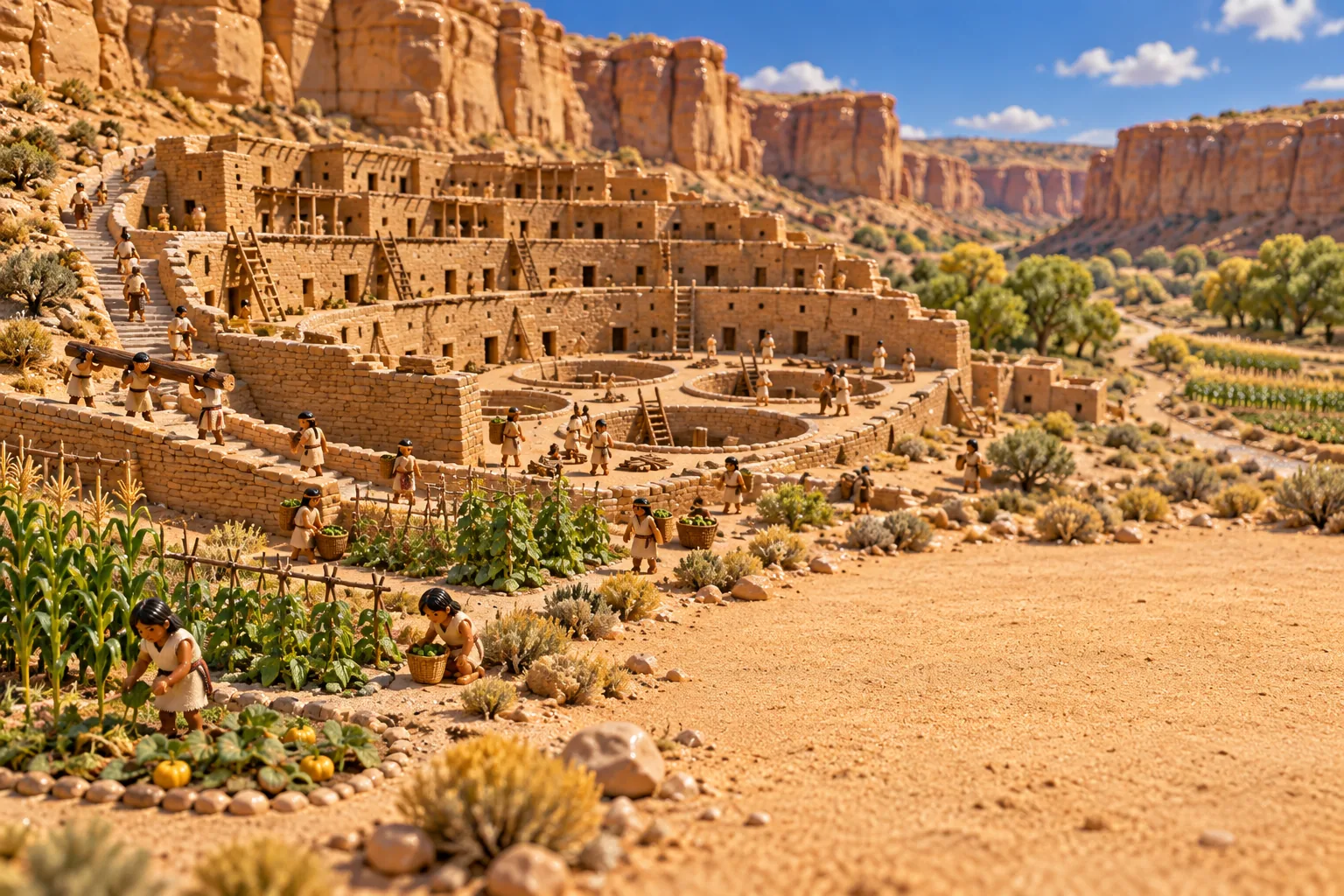
They built Pueblo Bonito, a stone great house of at least 650 rooms in Chaco Canyon, and cliff villages at Mesa Verde.
The Ancestral Puebloans farmed the dry plateaus where Utah, Colorado, Arizona and New Mexico meet. The Hopi call them Hisatsinom, the ancient people; the older name Anasazi is a Navajo word, often translated as enemy ancestors. Their communities were built around the kiva, a round room used mostly for ceremonies.
Between 900 and 1150 Chaco Canyon in New Mexico was their great centre. Chacoans quarried sandstone and hauled timber from mountains more than 80 kilometres away to raise 15 major complexes, which stayed the largest buildings in North America until the 19th century. The biggest, Pueblo Bonito, had at least 650 rooms and rose four storeys in places. Straight, carefully built roads radiated out from the canyon, and many buildings seem aligned to the cycles of the sun and moon. Farther north, towns such as Aztec Ruins on the Animas River grew during a wet period after 1100.
A 50-year drought that began in 1130 helped unravel the Chaco system, and severe droughts returned later. People moved to defensive sites on mesas and in cliffs, as at Mesa Verde, and by about 1300 much of the old homeland had been left behind, as the ancestors of today's Pueblo peoples migrated south.
Read more on Wikipedia
Sources: en.wikipedia.org/wiki/Ancestral Puebloans, en.wikipedia.org/wiki/Chaco Culture National Historical Park


