Early modern · war
American Indian Wars
The worst defeat Indian warriors ever inflicted on an American army came not at Custer's Last Stand but in the Ohio country, in the early 1790s.
From the first colonial settlements of the 17th century, English, French, Dutch and Spanish colonists fought the Indian nations of North America, and also enlisted them as allies against each other. In Virginia the English fought the Powhatan Confederacy, in New England King Philip's War of 1675–1678 set the colonists against the Wampanoag, Nipmuc and Narragansett. Most wars had the same cause: settlers and governments wanted tribal lands.
After the American Revolution the fighting moved west with the frontier. A confederacy of tribes in the Ohio country led by Blue Jacket and Little Turtle routed the armies of Generals Josiah Harmar and Arthur St. Clair in the early 1790s, but lost at Fallen Timbers in 1794 and had to give up most of Ohio. Many nations allied with Tecumseh sided with Britain in the War of 1812, and his death in 1813 broke their resistance in the Old Northwest. The Indian Removal Act of 1830 then pushed the nations of the South-east beyond the Mississippi, the Cherokee along the 'Trail of Tears'; the Seminoles of Florida fought and were never defeated.
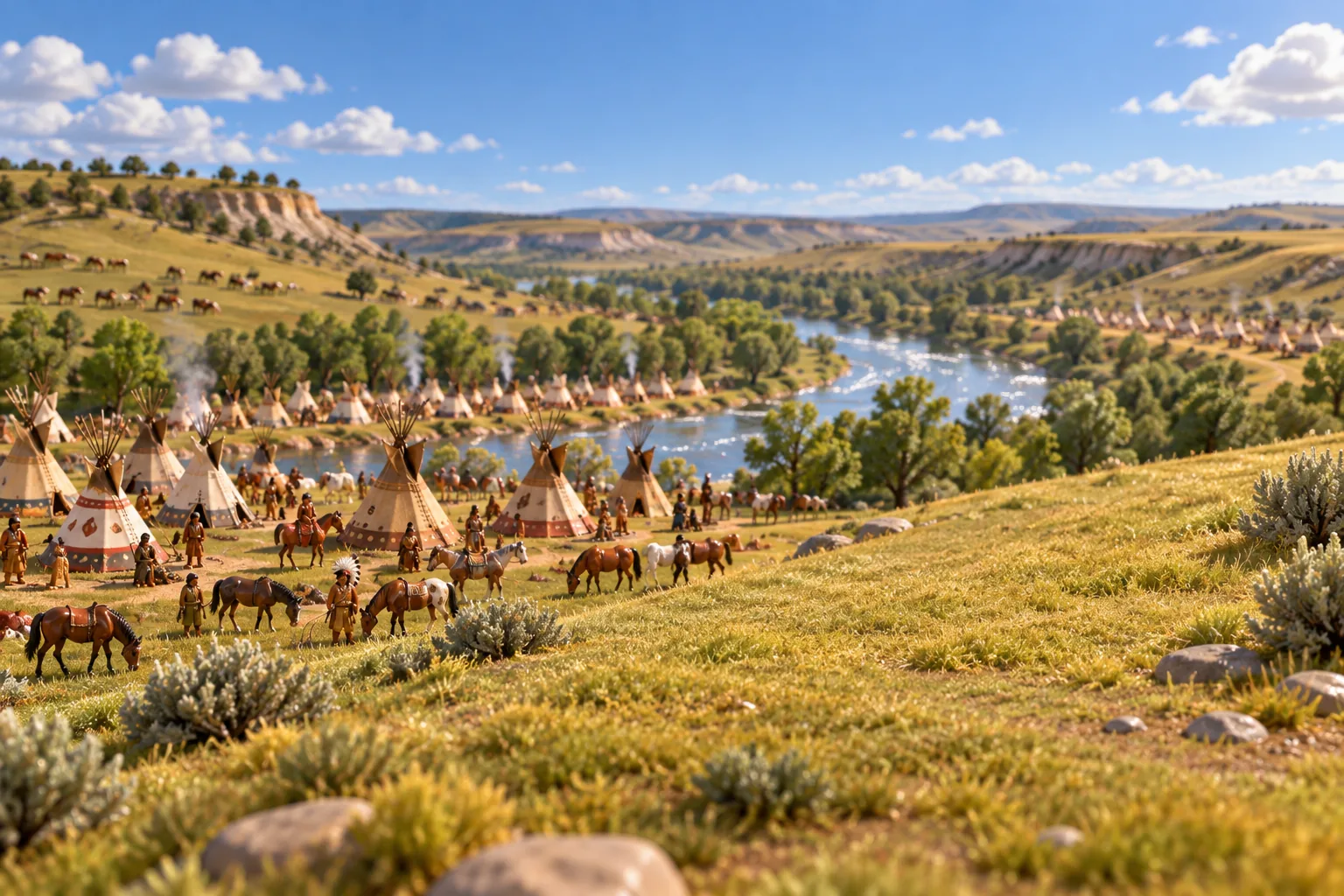
On the Great Plains, gold rushes and railways brought settlers, soldiers and treaties broken one after another. On 25–26 June 1876 Lakota warriors and their allies led by Crazy Horse wiped out George Custer and his men at the Little Bighorn. Geronimo's Apache band surrendered in 1886, and the massacre at Wounded Knee in December 1890 is taken as the end of the wars.
Read more on Wikipedia