Antiquity · war
Alexander the Great
A young king who had read the Iliad under Aristotle crossed into Asia and did not stop until his own soldiers refused to go further.
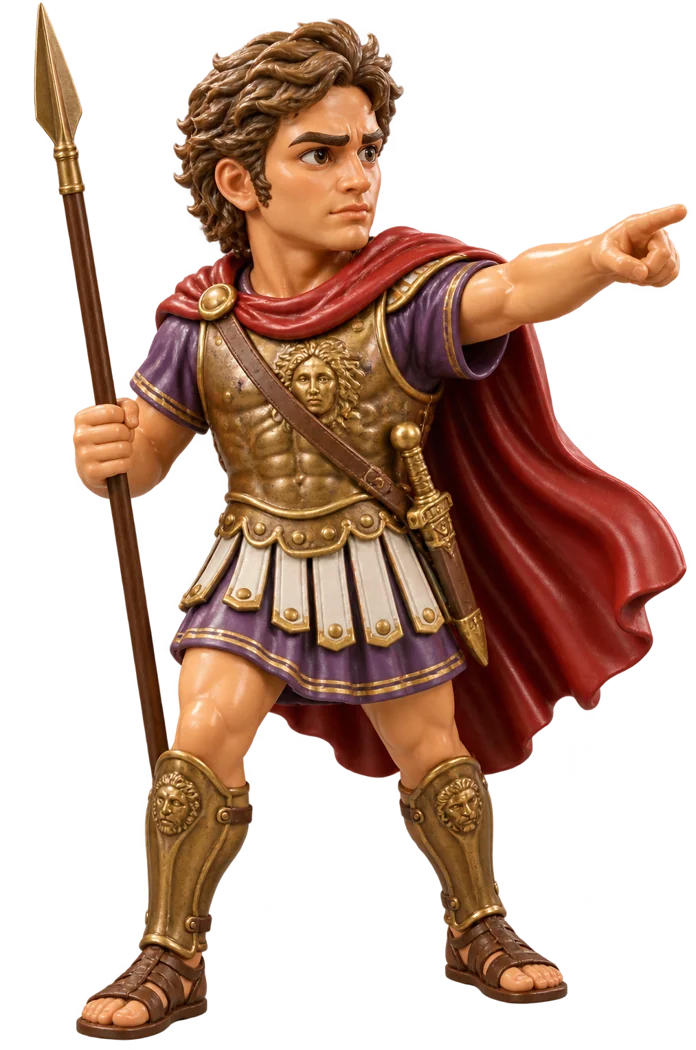
Alexander was born in Pella, the capital of Macedon, in July 356 BC, the son of King Philip II and Olympias. Until he was sixteen he was taught by the philosopher Aristotle, who gave him an annotated copy of Homer's Iliad that he later carried on campaign. When Philip was assassinated in 336 BC, Alexander became king at twenty. He crushed revolts in the Balkans, destroyed the rebellious city of Thebes, and took over the league of Greek states his father had built.
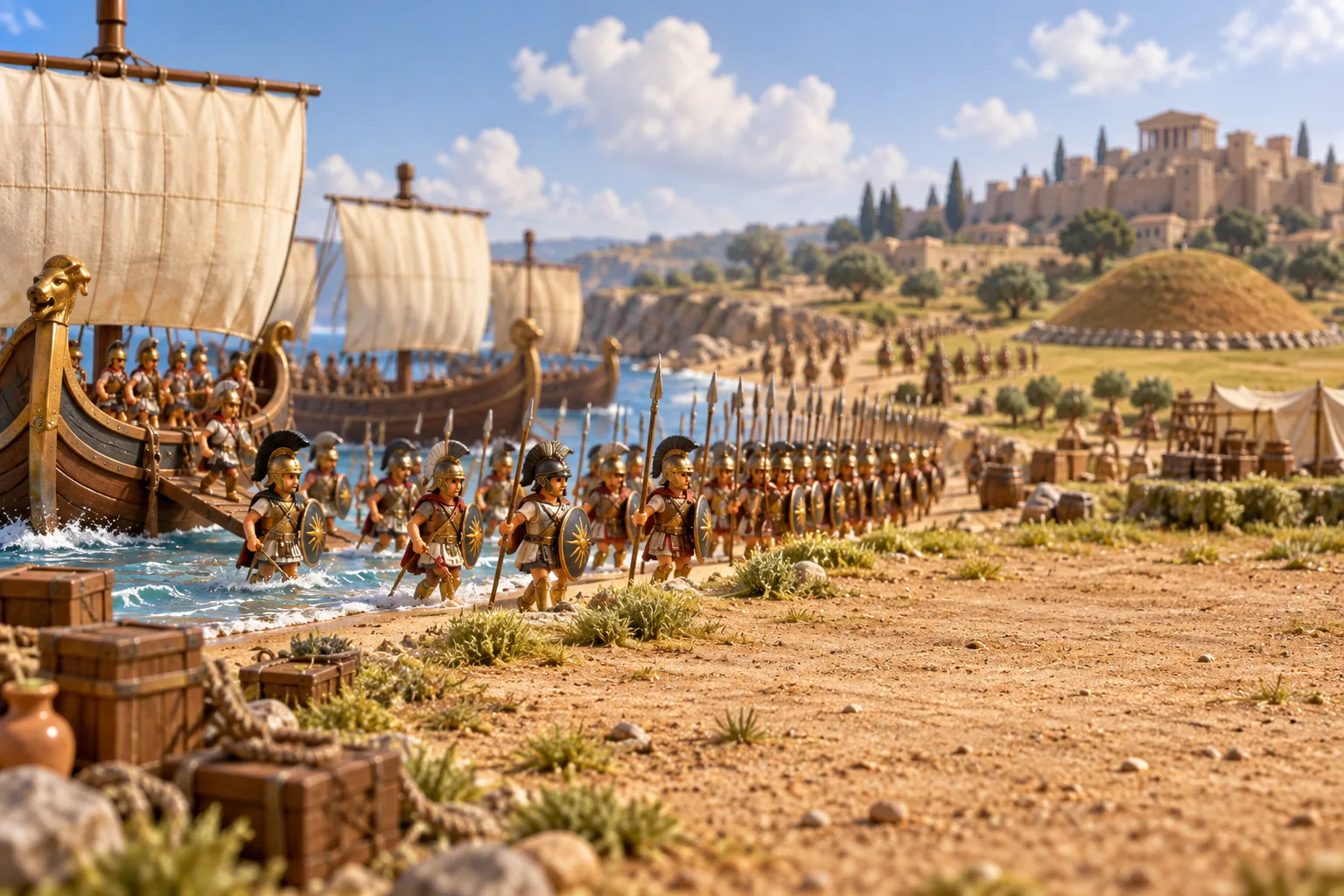
In the spring of 334 BC he led his army across the Hellespont, the narrow strait between Europe and Asia, to invade the Achaemenid Persian Empire. In May he won his first battle against the Persians at the river Granicus. At Gordium he "undid" the famous Gordian Knot, which legend said only the future ruler of Asia could loosen. He beat King Darius III at Issus in 333 BC and again at Gaugamela in 331 BC, took Egypt, where he founded Alexandria, and made himself master of the whole Persian Empire.
Still he pushed east. In 326 BC he invaded India and defeated King Porus at the Hydaspes. At the Beas River his exhausted army mutinied, and he turned back. He died in Babylon in June 323 BC, not yet 33, having never been defeated in battle. His empire stretched from Greece to the Indus, and his generals soon tore it apart.
Read more on Wikipedia
Sources: en.wikipedia.org/wiki/Alexander the Great, en.wikipedia.org/wiki/Battle of the Granicus


