
Industrial age · person
Albert Schweitzer
At 30, already famous as a theologian and an organist, he went back to university to study medicine, and in 1913 opened a hospital in a former chicken shed on the Ogooué River.
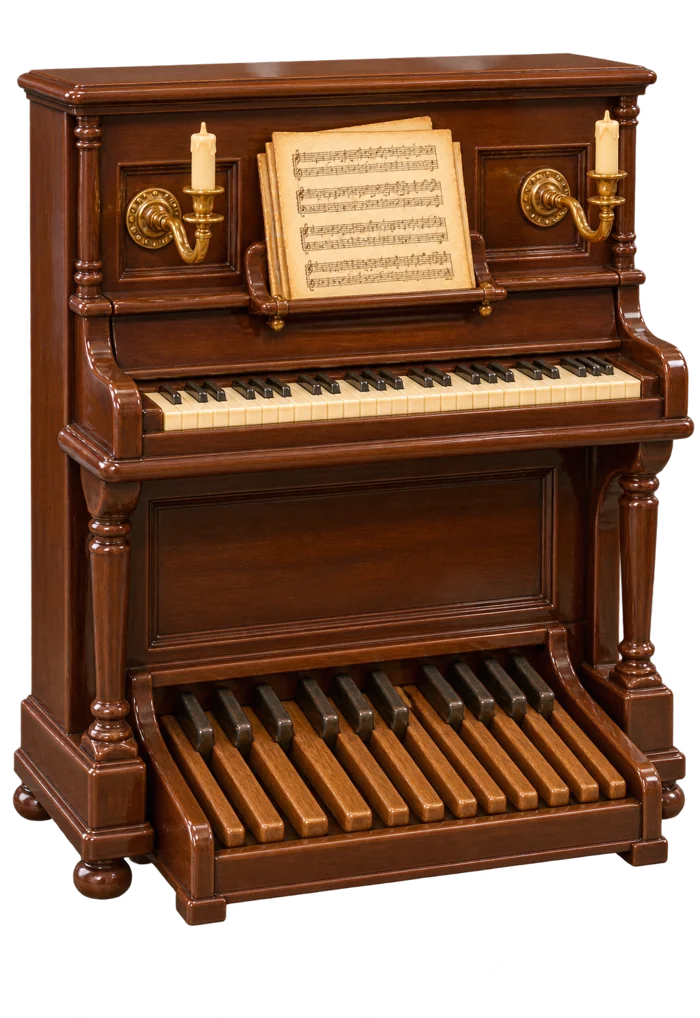
Albert Schweitzer was born on 14 January 1875 in Kaysersberg, Alsace, then part of the German Empire, and grew up in Gunsbach, where his father was the Lutheran pastor and the village church was shared by Protestants and Catholics. He studied organ from boyhood and became a leading interpreter of Johann Sebastian Bach, publishing J. S. Bach: Le Musicien-Poète in 1905. As a theologian he wrote The Quest of the Historical Jesus in 1906.
In 1905, aged 30, he answered a missionary society's call for a doctor, resigned his posts despite protests from friends and family, and enrolled to study medicine, finishing at the end of 1911. In June 1912 he married Helene Bresslau, and in early 1913 they went to Lambaréné, on the Ogooué River in French Equatorial Africa, nearly 200 miles upstream from the coast. After working in a former chicken hut, they built a corrugated-iron hospital; Helene served as anaesthetist, and in the first nine months they saw about 2,000 patients. As Germans in a French colony during World War I, they were interned in France in 1917. He returned in 1924, rebuilt the hospital, and from 1937 worked there through the Second World War.
He called his philosophy Reverence for Life and won the 1952 Nobel Peace Prize, using the money to build a leprosy settlement. He campaigned against nuclear weapons with Albert Einstein and Bertrand Russell. Critics, among them Chinua Achebe, called his view of Africans paternalistic. He died at Lambaréné on 4 September 1965.
Read more on Wikipedia
