Middle Ages · politics
al-Andalus
For almost eight centuries part of Western Europe was ruled by Muslim emirs and caliphs, and one of its cities was among the great centres of learning of the medieval world.
On 30 April 711 the commander Tariq ibn Ziyad landed at Gibraltar with an army of 7,000 men, sent from North Africa by the Umayyad Caliphate. On 19 July he defeated the Visigothic king Roderic at the Battle of Guadalete, and within a few years most of the Iberian Peninsula was under Muslim rule. The Muslims called it al-Andalus. Raiders pushed on into France until Charles Martel defeated them near Poitiers in 732.
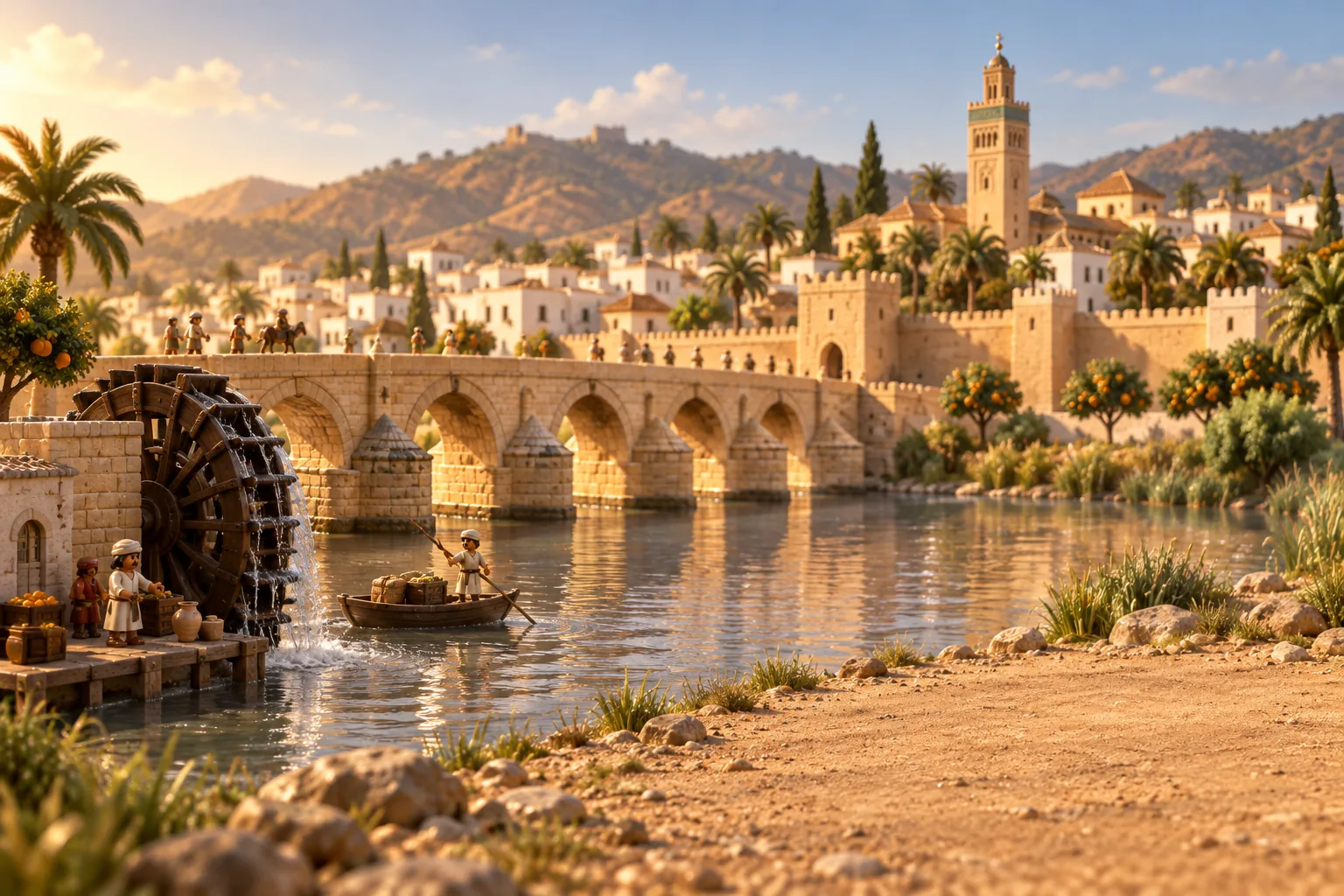
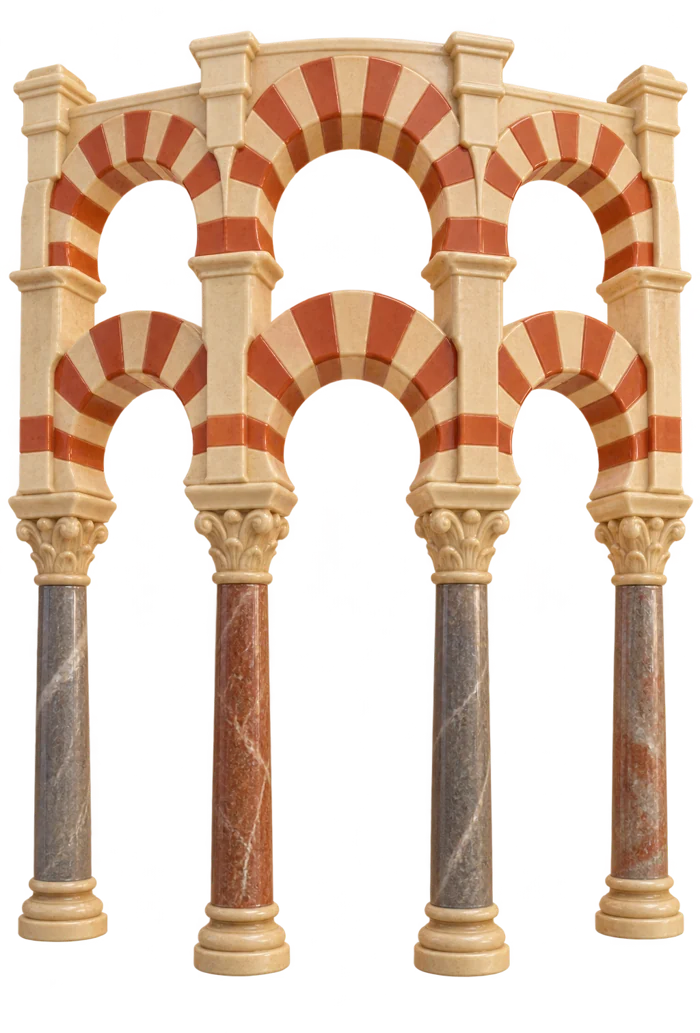
In 756 Abd al-Rahman I, an Umayyad prince who had escaped the massacre of his family in the east, made himself emir in Córdoba, and in 785 he built its Great Mosque. In 929 his descendant Abd al-Rahman III declared himself caliph. Under the Caliphate of Córdoba the city became one of the leading cultural and economic centres of the Mediterranean world. Scholars of al-Andalus made advances in trigonometry, astronomy, surgery and farming, and the works of thinkers such as Averroes had a major influence on the intellectual life of medieval Europe.
After 1031 the caliphate broke up into rival taifa kingdoms. The Christian kingdoms of the north pushed south, taking Toledo in 1085, and two empires based in Marrakesh, the Almoravids and then the Almohads, crossed over to defend al-Andalus. After the Christian victory at Las Navas de Tolosa in 1212, most of the south fell. Only the Emirate of Granada was left, and its last ruler, Boabdil, surrendered it to the Catholic Monarchs on 2 January 1492.
Read more on Wikipedia
Sources: en.wikipedia.org/wiki/Al-Andalus


