Middle Ages · person
Ādi Shankara
Almost nothing certain is known of his life, yet the monk who taught that the self and the whole of reality are one became, centuries later, India's most revered philosopher.
Ādi Shankara lived in the 8th century. Modern scholars place him in its first half, though older books give 788–820. Reliable facts about his life are scant. The oldest hagiographies, written centuries after his death, say he was born in the village of Kaladi in Kerala. Every version tells how, at the age of eight, he was seized by a crocodile while bathing and begged his mother to let him become a sannyasin, a wandering ascetic. She agreed, the crocodile let go, and he left home to study.
The stories make him a disciple of Govinda Bhagavatpada, studying the Vedas, the Upanishads and the Brahma Sutras. The works scholars widely accept as his own are a commentary on the Brahma Sutras, commentaries on ten principal Upanishads and on the Bhagavad Gita, and the Upadeśasāhasrī. Their teaching, Advaita Vedanta, holds that the individual self is one with Brahman and that knowing this brings liberation. Legend sends him across the subcontinent, debating rivals such as Mandana Mishra and founding four mathas, monasteries at Dvaraka, Puri, Sringeri and Badrikashrama.
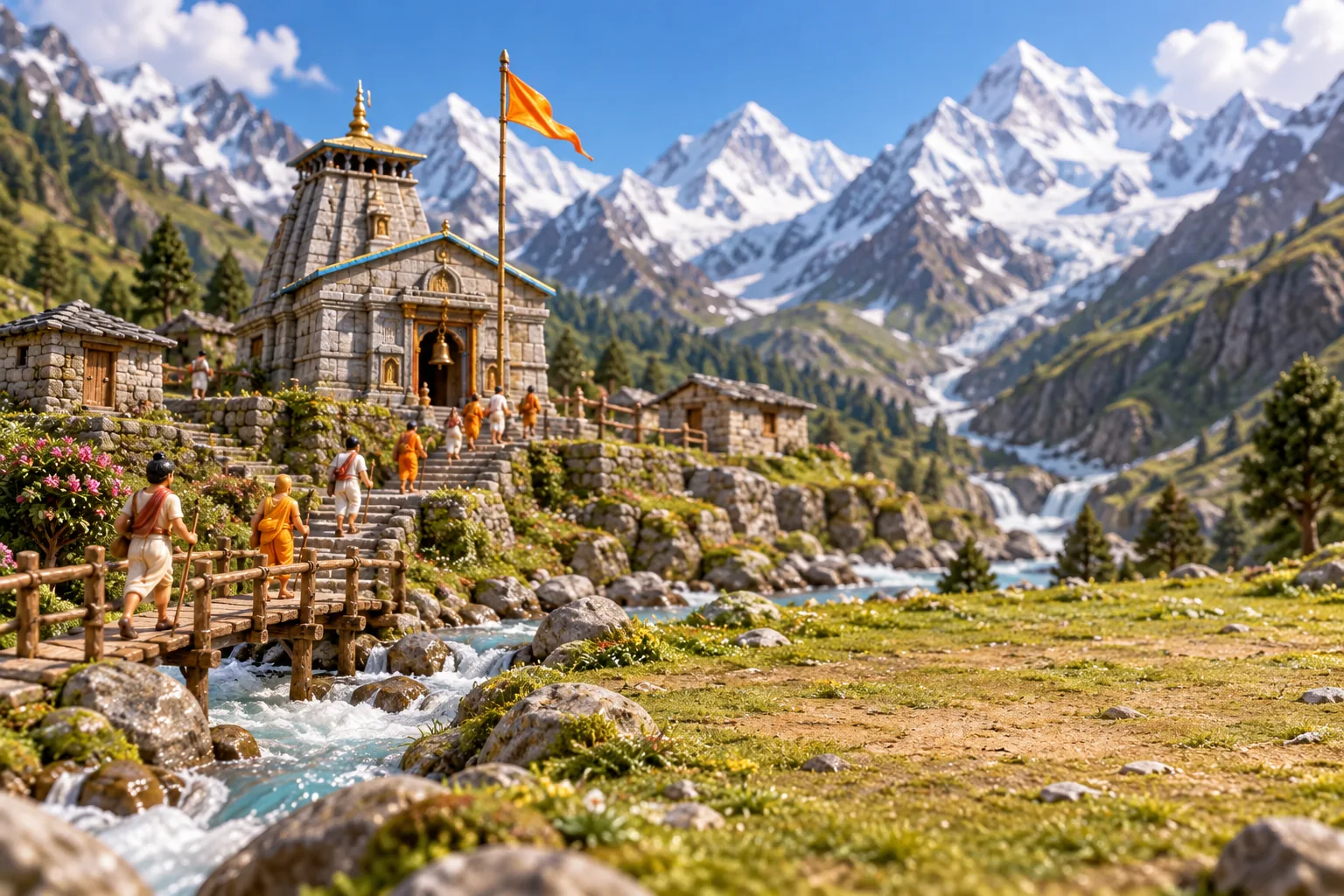
In his own time he was overshadowed by the older scholar Mandana Mishra, and no Hindu, Buddhist or Jain source mentions him until the 11th century. His fame grew from the 14th century, when the Sringeri monastery won the patronage of the Vijayanagara emperors and hagiographies turned him into the hero who re-established traditional Hinduism. Many of them say he died at Kedarnath, a pilgrimage site high in the Himalayas. Today he is often revered as India's most important philosopher.
Read more on Wikipedia
Sources: en.wikipedia.org/wiki/Adi Shankara, en.wikipedia.org/wiki/Advaita Vedanta