Early modern · state
Adal Sultanate
For more than a decade the armies of a sultanate from the Harar plateau held most of Christian Ethiopia, until a battle by Lake Tana in 1543.
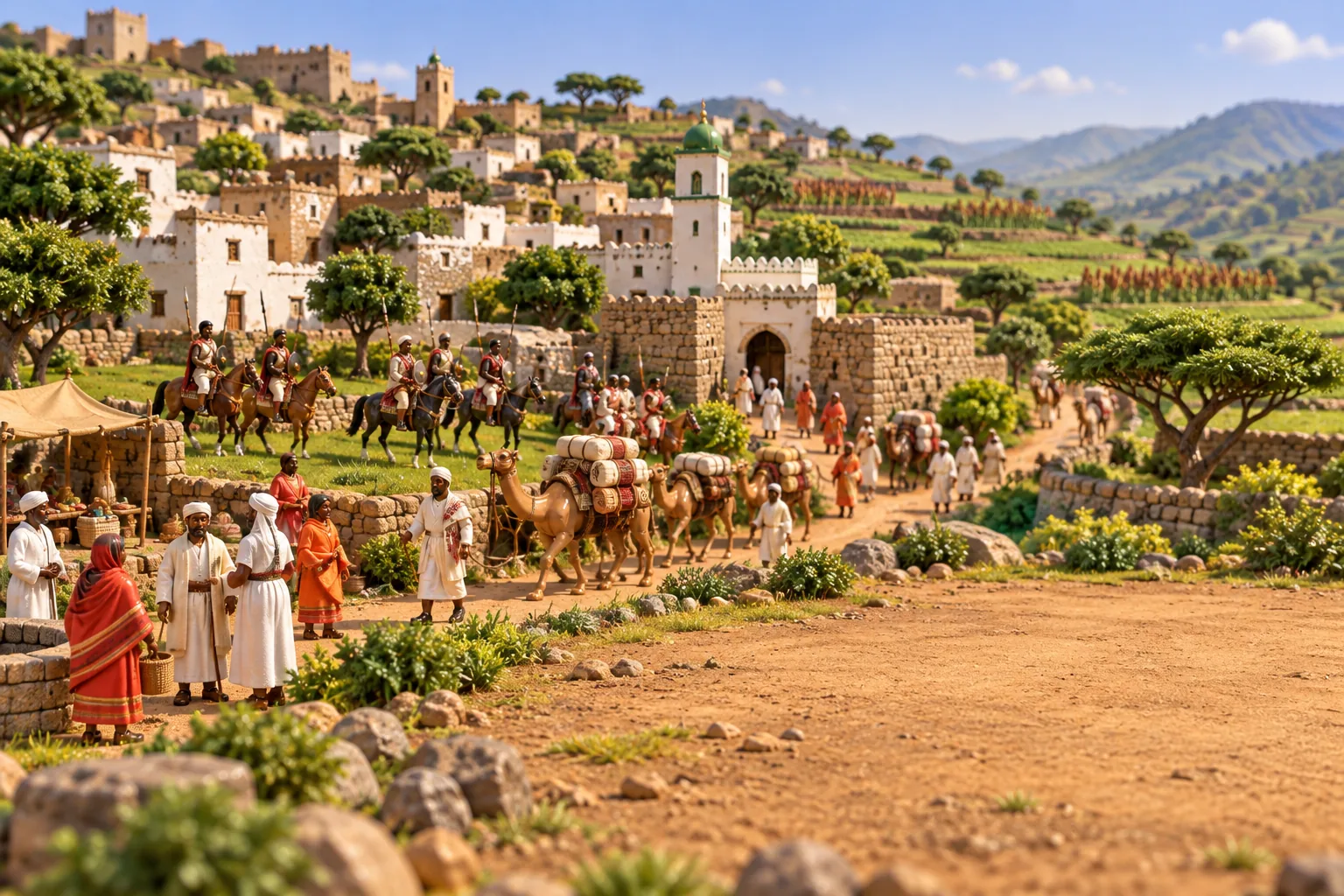
In 1415 Sabr ad-Din III, heir of the defeated Walashma sultans of Ifat, came back from exile in Yemen and proclaimed himself king of Adal on the Harar plateau. His kingdom lived from trade through the port of Zeila, sending gold, ivory, cattle and grain to Arabia and buying Chinese celadon and Egyptian coins in return. Its sultans fought the Christian emperors of Ethiopia for over a century, and in 1445 Emperor Zara Yaqob killed Sultan Badlay at the Battle of Gomit.
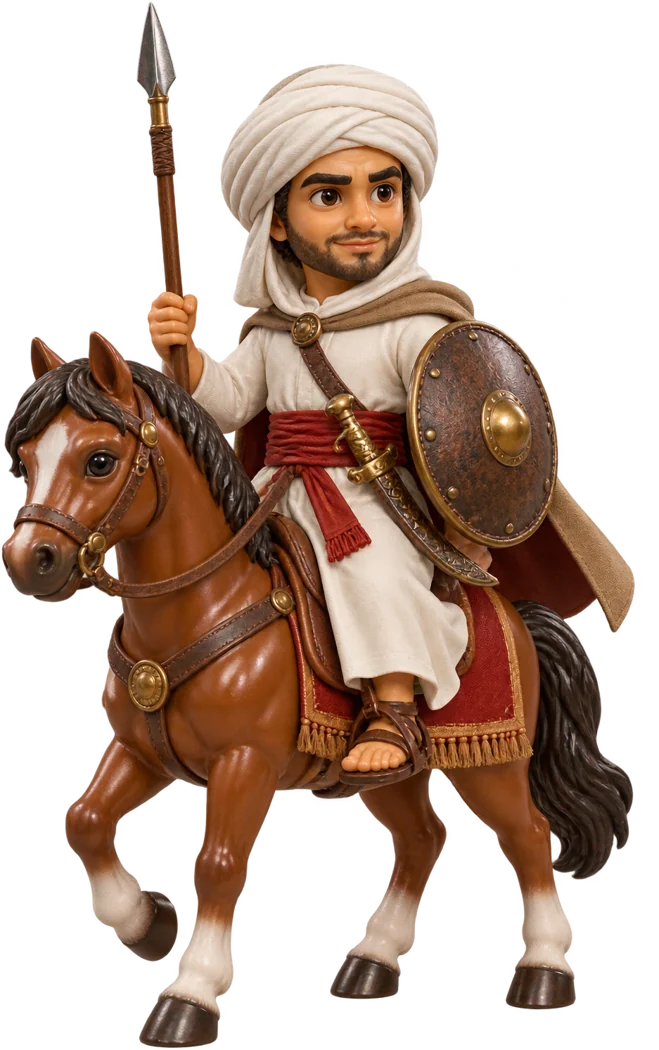
In 1520 Sultan Abu Bakr moved the capital from Dakkar to Harar. Soon power passed to a young commander, Ahmad ibn Ibrahim, called Gragn, the left-handed. Armed with matchlocks and cannon bought through Zeila, he beat the Ethiopians at Shimbra Kure in 1529 and in the following years occupied Dawaro, Shewa, Bete Amhara and Lasta, while Emperor Lebna Dengel fled from province to province. Portugal sent 400 musketeers under Cristóvão da Gama; Ahmad killed him in 1542, but on 21 February 1543 he himself fell at Wayna Daga, east of Lake Tana.
His successor Nur ibn Mujahid built a wall around Harar and killed Emperor Gelawdewos in 1559. But Oromo migrations, famine and wars between emirs wore Adal down, and in 1577 Imam Muhammad Gasa moved the capital to the oasis of Aussa.
Read more on Wikipedia
Sources: en.wikipedia.org/wiki/Adal Sultanate, en.wikipedia.org/wiki/Ahmad ibn Ibrahim al-Ghazi, en.wikipedia.org/wiki/Battle of Wayna Daga, en.wikipedia.org/wiki/Harar
