
Industrial age · nature
1931 China floods
A city of hundreds of thousands stood under many feet of water for almost three months, and the world barely noticed.
From 1928 to 1931 China suffered a long drought. Then the winter of 1930–31 left deep snow and ice in the mountains, and in early 1931 the meltwater reached the middle Yangtze just as heavy spring rains began. Instead of the usual three separate high-water seasons, the rain never stopped. In July alone nine cyclones hit the region, against an average of two a year, and the Yangtze rose higher than ever recorded. The floods covered an area about the size of England and half of Scotland, across eight provinces from Hubei to Jiangsu.
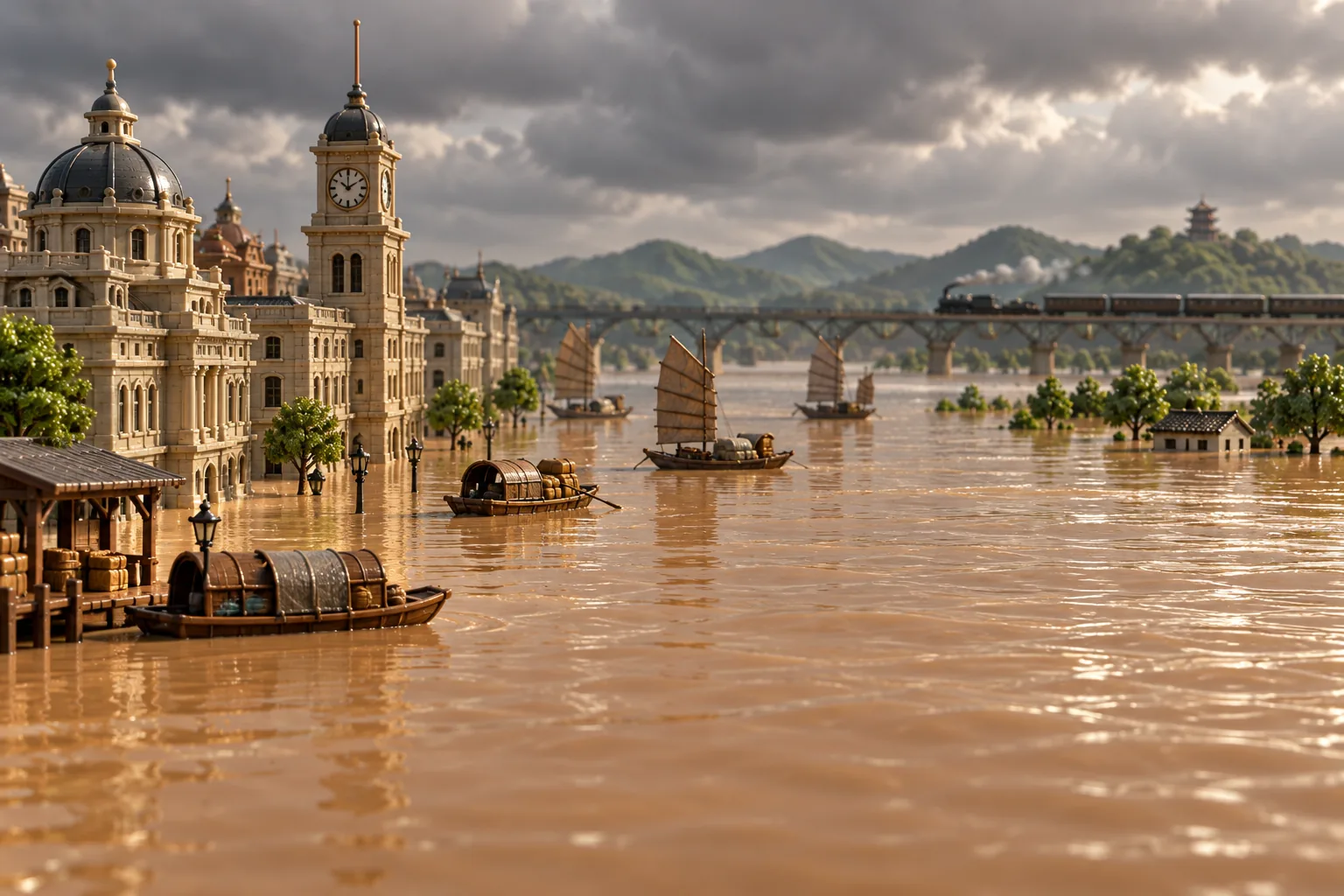
In Wuhan a dike broke just before 6 a.m. on 27 July, leaving about 782,000 residents and refugees homeless, and parts of the city stayed under water for close to three months. Some 30,000 people sheltered on a single railway embankment in Hankou. Nanjing, then the capital, was also hit. On 25 August water rushing down the Grand Canal broke the dikes at Lake Gaoyou, and in Gaoyou County alone 18,000 people drowned.
The worst killers came later: hunger and disease, including cholera, measles, malaria and dysentery, spread through crowded refugee camps. At least 150,000 people drowned in the first months, and estimates of the total dead range from about 422,000 to as many as 4 million. The government's National Flood Relief Commission, led by T. V. Soong, brought in experts and the League of Nations, but the Japanese invasion of Manchuria that autumn made relief far harder.
Read more on Wikipedia


