Early modern · nature
1755 Lisbon earthquake
The prime minister of Portugal sent every parish priest in the country a list of questions about the earthquake, and their answers made him a forerunner of modern seismology.
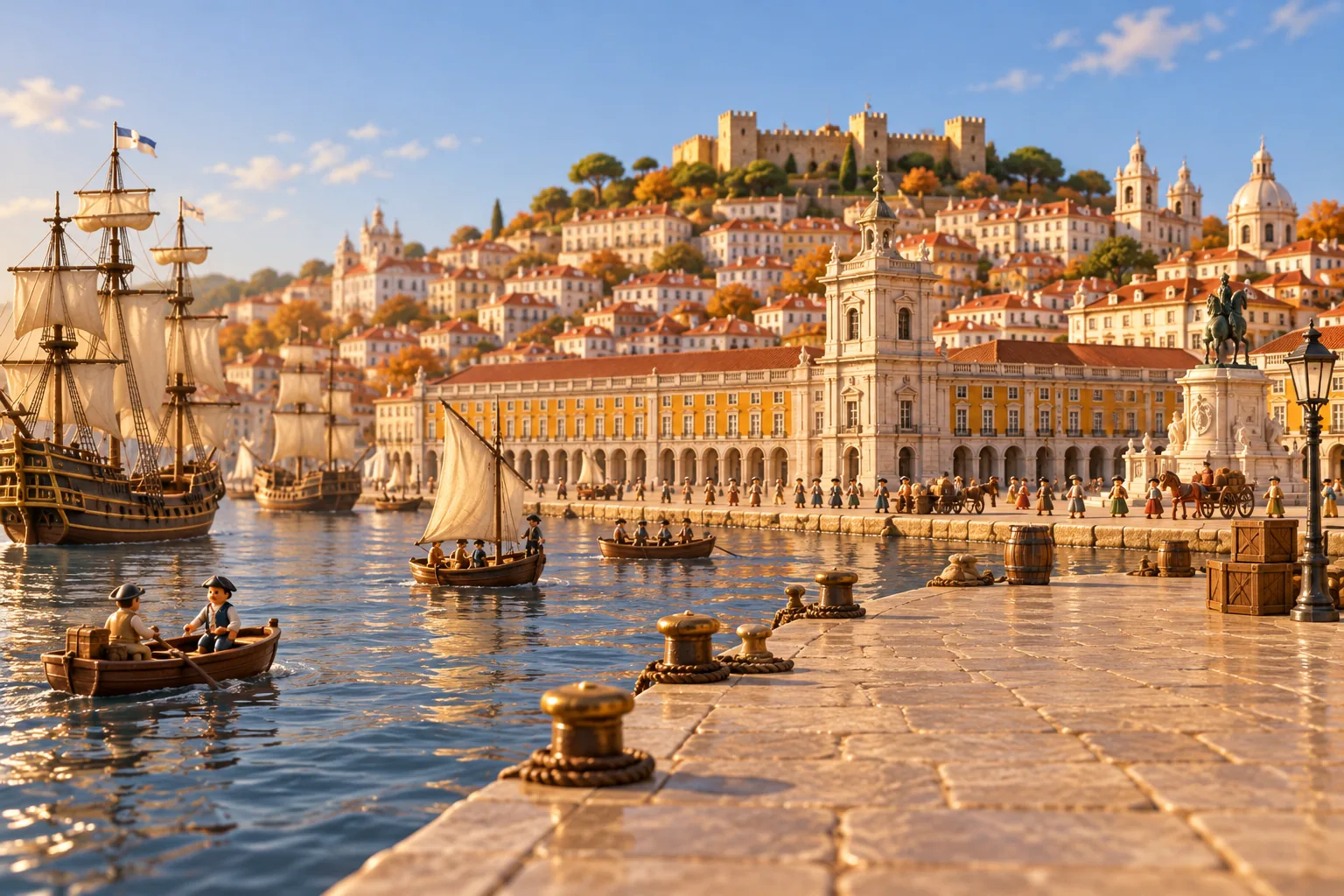
At about 9:40 on the morning of Saturday, 1 November 1755, All Saints' Day, a great earthquake struck Lisbon. Its epicentre lay in the Atlantic, south-west of Cape St. Vincent, and seismologists estimate its magnitude at 7.7 or more. The shaking lasted between three and a half and six minutes. Survivors ran to the open docks and saw the sea pull back; about forty minutes later a tsunami swept over the harbour and the lower town, followed by two more waves. Candles lit in homes and churches for the holiday fell over, and a fire burned for hours.
Of Lisbon's roughly 200,000 people, between 30,000 and 40,000 died, and perhaps 10,000 more in Morocco. About 85 per cent of the city's buildings were destroyed, among them the Ribeira royal palace with its library of 70,000 books and paintings by Titian and Rubens. The king, Joseph I, survived because the court had left the city that morning. His minister, the future Marquis of Pombal, is said to have ordered: 'Bury the dead and heal the living.'
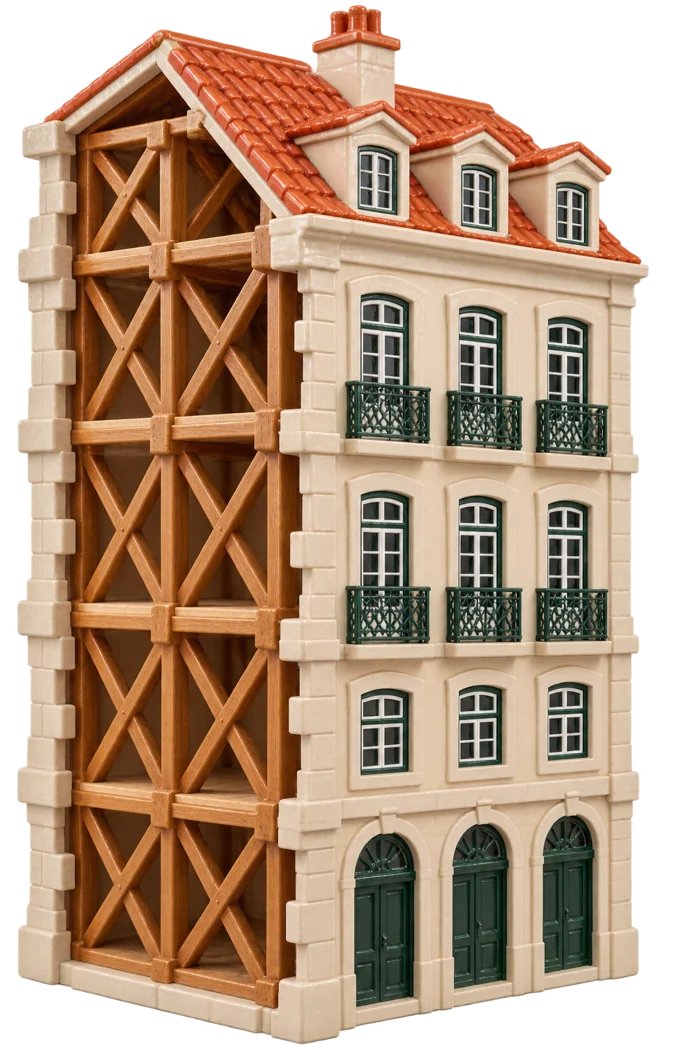
Pombal had the old lower town razed and rebuilt on a grid of wide, straight streets. Its new buildings were among the first in Europe designed to resist earthquakes, and wooden models were tested by marching troops around them. The disaster shook European thinkers too: Voltaire wrote a poem on it and mocked the idea that this was 'the best of all possible worlds' in Candide.
Read more on Wikipedia


